

Most moldable sand does have a smell, and the kind of smell matters far more than the strength: an earthy, mineral note is normal, a sharp alcoholic or solvent note usually means production residue that should fade within days of open air, and anything musty, sour, fishy, or vinegary points to moisture and microbial growth that will not fix itself. Your nose sorts a tub into one of those categories in about two seconds, which is faster than any authenticity check and more useful than most of them. What follows is how to read that first impression, what each odour family means, and what to do with the tub sitting in front of you today.
Key takeaways
- An earthy, mineral, wet-stone note is normal raw material aroma, while a sharp alcoholic or solvent note usually means production residue that should weaken noticeably within three days of open air.
- Never add water, vinegar, baking soda, heat, alcohol, or essential oils to fix a smell; each one damages the hydrophobic binder film or leaves a residue, and some create a new odour problem.
- A sweet or cake-like scent is deliberate added fragrance that smells identical on day one and day thirty, so check the packaging before assuming spoilage.
- Sealing damp sand in a warm, airtight tub is the main cause of musty odour; store it dry, at room temperature, loosely covered for daily use, and label each tub with the date opened.
What You Are Actually Smelling: Four Sources of Odour in a Tub of Moldable Sand
A smell complaint feels vague until you count the places it can come from. The formula is deliberately short: mineral sand held together by a small fraction of binder, which in the most common formulation means roughly 98% sand and 2% polymer, typically polydimethylsiloxane (PDMS), a silicone oil. Fewer ingredients means fewer suspects, and that turns a panicky question into a short checklist.
Source one: the sand itself. Clean mineral sand contributes almost nothing volatile. Fresh sand smells faintly of wet stone, or of nothing at all. If you have ever opened a bag of sandpit sand, you already know the note. It is not a defect and it does not strengthen with age.
Source two: the binder. This is where a new-tub smell usually starts. Silicone oils and waxes carry a faint waxy, putty-like note that weakens as the volatile fraction leaves the surface. Note that not every manufacturer uses the same system: our own magic sand is built on round, smooth glass beads with beeswax and organic silicone, which is a different ingredient set with a different starting aroma. The breakdown of what is in magic sand and why it behaves so uniquely goes deeper on that chemistry.
Source three: things added or left behind. These two behave nothing alike. Added fragrance is deliberate and stable. Manufacturing residue is accidental and should diminish. The mistake is treating both as spoilage.
Source four: contamination. Hand moisture, humidity, crumbs, dust, and anything else that lets microbes establish themselves on the sand and the binder film.
One honest contrast worth stating: IBIZA describes its magic sand as odorless, while the wider category is widely reported as carrying a faint natural-sand note. Treat an odorless claim as a manufacturing target rather than a promise your nose will automatically confirm, and judge the tub in front of you on what it does over the next three days.
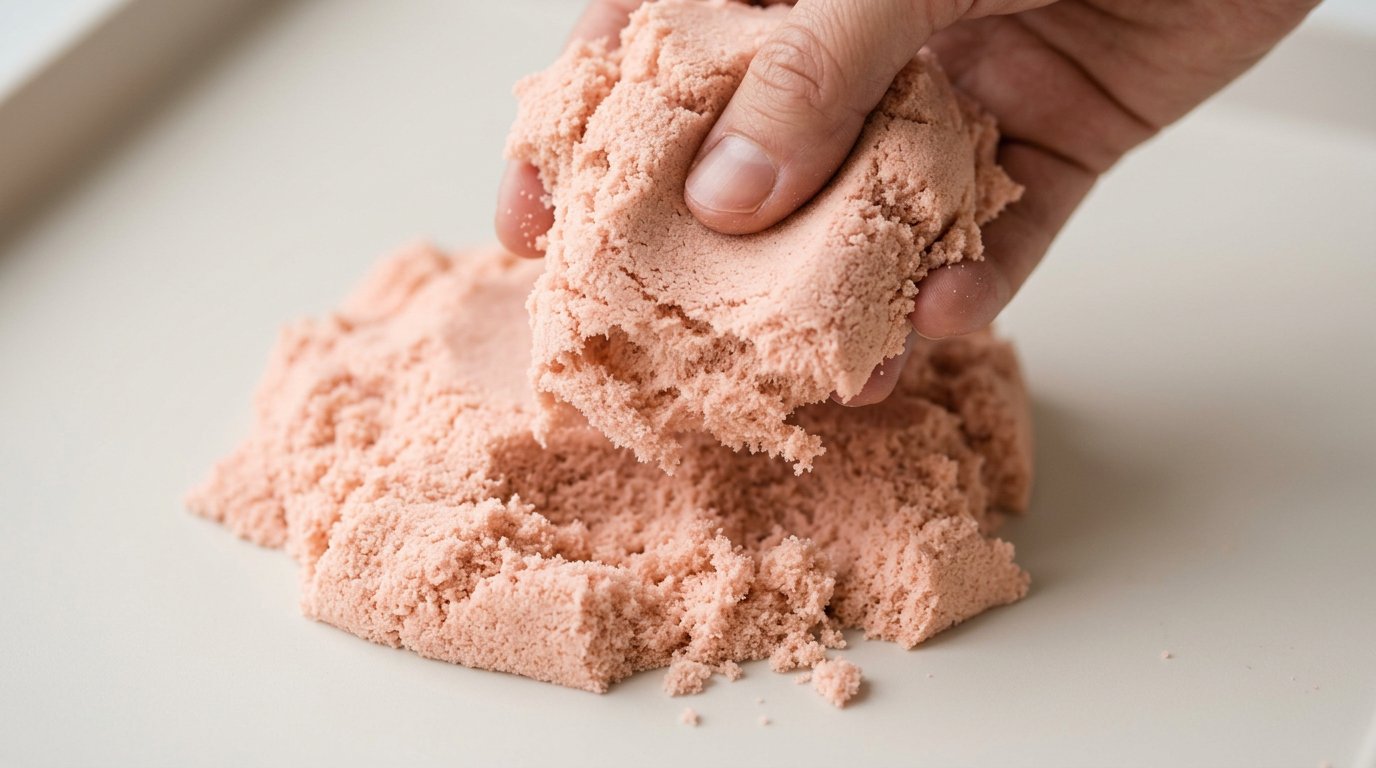
The Five Smells of Kinetic Sand and What Each One Is Telling You
Place your tub in one row and you have a likely cause and a first verdict inside a minute. The middle column is the part most guides skip: what to watch for as you come back to the sand at 24, 48 and 72 hours. Treat those three checks as your schedule rather than as a countdown to a fixed outcome.
| The smell | Most likely cause | What to watch for at 24, 48 and 72 hours | First verdict |
|---|---|---|---|
| Earthy, mineral, wet stone | Normal raw material note from clean mineral sand | Faint at the first check and fading from there, or faint and unchanged. Either reading is fine. | Keep |
| Sharp, alcoholic, solvent, acetone-like | Residual volatile compounds not fully removed during production | Weakens from one check to the next as the residue leaves. A note that holds at the same strength every time is the one to act on. | Air out and reassess |
| Musty, sour, damp basement, fishy, vinegary | Moisture plus microbial activity | Tends to build across the three checks instead of settling. | Treat as contaminated |
| Sweet, fruity, floral, cake-like | Added fragrance, a product decision rather than a fault | Identical at every check and matches the pack description. | Check the label before assuming spoilage |
| Burnt, hot plastic, rubbery | Heat or UV damage to the binder, often a radiator, a car, or a sunlit window | Unchanged at every check. | Not recoverable |
Intensity is the weaker signal. A faint solvent note on day one and the same faint note on day thirty mean opposite things: the first is a residue leaving, the second is a residue that was never going to leave. Judge by change, not by volume. Two tubs from the same production run can also read differently on the nose while both are unremarkable, which is why the comparison that carries information is the same tub over time rather than one tub against another.
One confusion deserves naming. Vinegar from microbial activity and the sharp acidic hit left by an actual vinegar cleaning attempt smell similar and mean very different things. The question to ask is not what the tub smells like now but what already happened to it. If nobody cleaned it with anything, a vinegary note is a moisture story.
New Sand Smells Strongest: The Curing and Off-Gassing Timeline
The strongest smell you will ever get from a tub is the one in the first minute after the seal is cut. That is chemistry, not spoilage. Sealed packaging traps whatever volatile fraction is still leaving the material, so the first open concentrates it in your face. Nothing has gone bad inside the bag.
Run a proper airing test
- Spread the sand in a thin layer on a large flat tray. A baking tray or a shallow storage box lid works.
- Put it in a dry room away from direct sun, not on a windowsill and not in a bathroom.
- Turn and rake it twice a day so new surfaces are exposed.
- Smell it at 24, 48, and 72 hours, and squeeze a handful each time to check that it still holds a shape.
Success looks like this: the sharp note drops noticeably within the first day or two and is faint or gone by day three, while texture and mouldability are unchanged. A stubborn smell means one of two things. Either the residue was not properly removed during production, or the odour was never a residue at all and you are dealing with contamination or an added fragrance that will never fade because it is supposed to be there.
Here is the counterintuitive part. Do not add water while airing. Airflow and dry air are the mechanism, and moisture works directly against it. The advice to spread damp sand out on a large surface and keep raking and mixing is sound; the advice to add a few drops of water to fix a smell is not, because it treats a texture symptom with the exact input that caused the problem.
Keep notes as you go: batch or lot details, the date the pack was opened, and the dates of each check. That log is what a retailer or manufacturer can act on. A vague complaint about a smell usually goes nowhere, while a dated record of a solvent note that was still strong at 72 hours is a specific, answerable question.
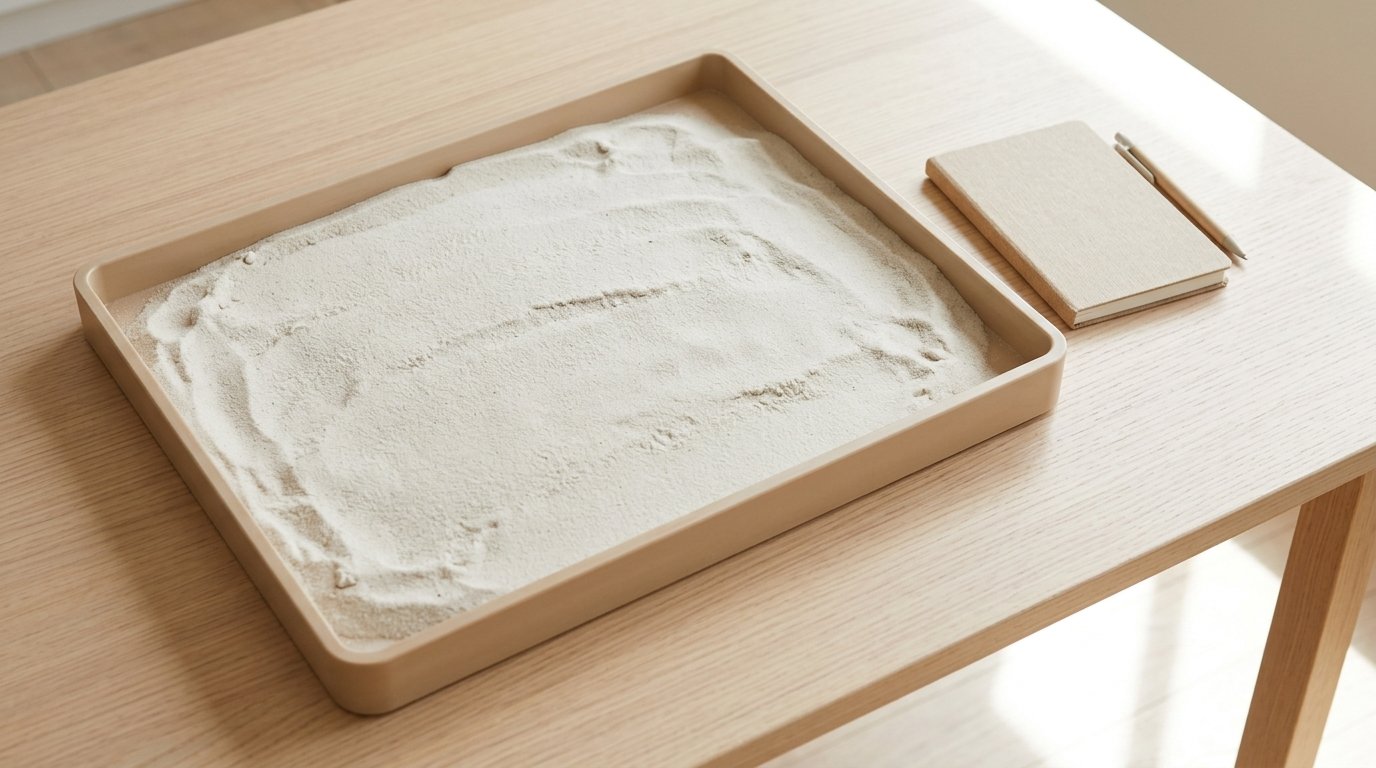
When a Smell Is a Quality Signal: Solvent Residue, Counterfeits, and What the Standards Cover
A smell can be a legitimate quality complaint even when nothing has contaminated the tub. Volatile residues are meant to be removed during production. A strong solvent note suggests that step was rushed, and rushed steps rarely happen alone.
The same reasoning extends to the rest of the formulation. Toy standards governing skin-contact children’s products set a pH band, and they set it for a reason; a sand measuring well outside the range applied to comparable products raises a formulation question worth putting to whoever made it. Dye belongs in the same conversation. Colour that migrates onto hands or washes out on first contact is a formulation signal in the same way a persistent smell is. None of this needs a laboratory on your kitchen table, but each point is a reason to ask for the paperwork behind the batch.
Counterfeits are the other explanation people reach for, and packaging is a weak test. Print quality and box design are cheap to copy. Weight, how the sand holds a shape, residue left on hands, and smell are stronger indicators. A copy can pass a visual check and still fail on the nose and on pH.
What certificates actually cover matters here. Compliance with China 3C, SGS, and ASTM testing, and meeting American and European safety standards, are statements about tested properties under defined methods. They are not a per-batch guarantee that this particular tub smells the way it should. When smell is the complaint, ask for batch-level documentation rather than a general certificate, and what quality control actually looks like in moldable sand manufacturing shows what a producer should be able to produce.
The safety question, answered without overreaching: water repellency is a surface property, and it describes behaviour rather than hazard. It explains why a damp hand does not turn the sand to mud, why a splash beads instead of soaking in, and why water-based cleaners sit on top of the material. It says nothing about toxicity, about absorption through skin, or about which ages should use the product. Those questions are settled by formulation and by testing, not by how the sand behaves under a tap. Ingestion and choking risk need their own treatment in our guide to kinetic sand safety, age guidance and what testing covers, and a smell is not a toxicity test. A smell cannot tell anyone whether a product passes or fails a standard. It can tell them whether to ask the question, and who to ask.
Musty, Sour, Fishy, or Vinegary: The Biology of a Damp Sensory Bin
Moldable sand is hygroscopic, meaning it absorbs and releases moisture from the air. Every smell in this family starts with water, and water gets in through the same budget no matter which door it uses: a humid room, a tight lid, or one wet-handed play session all add to it.
The closed tub is the real culprit. Damp sand sealed airtight at room temperature is a small humid chamber, which is precisely the condition microbes need. Leave the same sand in an open tray in a dry room and the problem usually never starts.
Fishy and vinegary notes are microbial by-products, not ingredients. Amines read as fishy; acetic acid reads as vinegar. Neither belongs in a clean tub, and neither will be improved by anything you add to it.
Does moldable sand ever go bad?
In the practical sense, yes. The binder and pigment can degrade, and contamination can make a tub unpleasant or unhygienic long before the sand stops holding a shape. The material failing and the tub becoming unsuitable are two different events, and the second usually happens first.
Is there a way to sanitize it?
Not really, and that is the honest answer most pages avoid. The material repels water, so water-based sanitisers bead on the surface instead of penetrating. Heat damages the binder. Alcohol strips the silicone film. Disinfectant residues stay behind in a material children handle with their hands and, sometimes, their faces.
Discard criteria you can apply today: visible fuzz or dark patches, or a smell that gets worse rather than better after three days of airing. In a classroom, do not attempt a rescue at all. The cost of replacement is small next to the cost of a shared bin that keeps reinfecting the room.
The salvageable case is narrow but real: a tub that is merely damp and not yet musty can often be recovered by airing, turning, and returning it to storage only once it is dry to the touch.
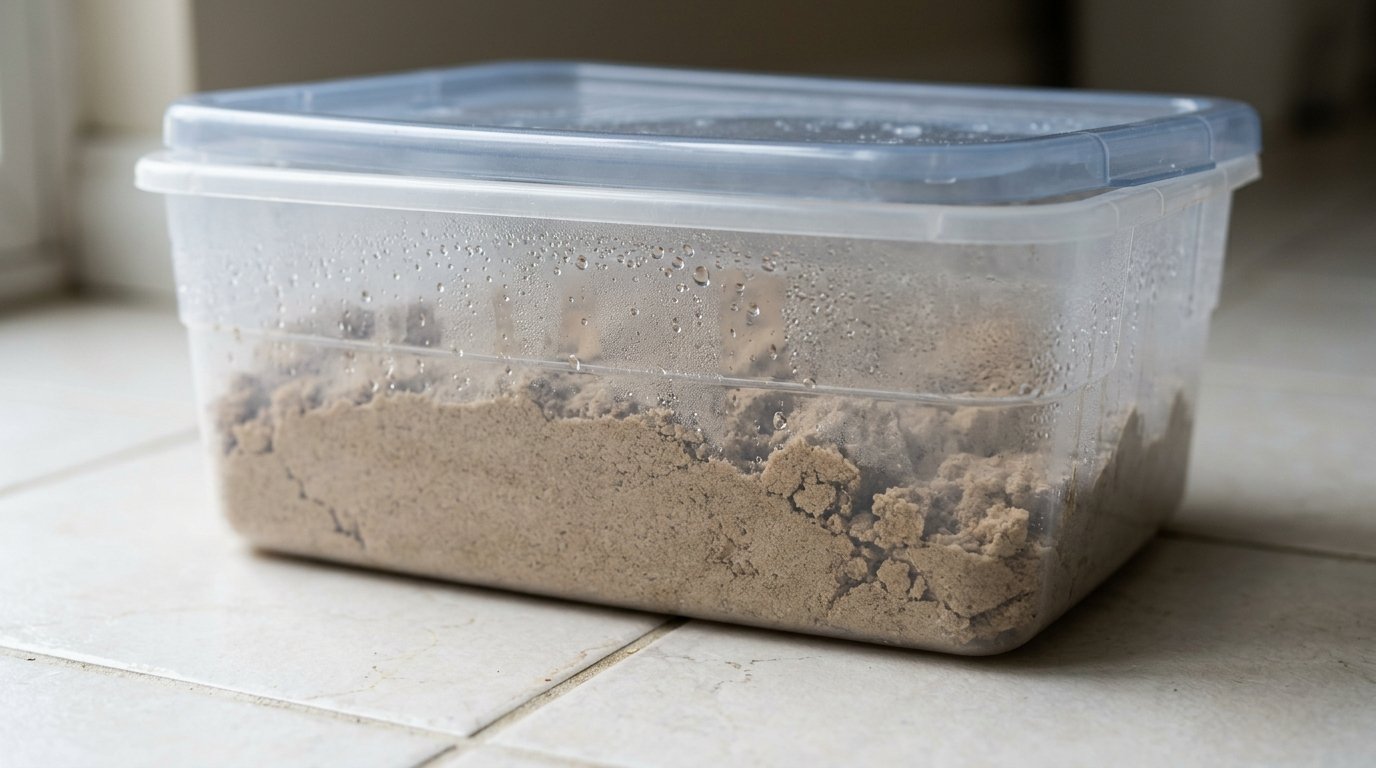
Why the Home Remedies Backfire: Water, Vinegar, Ovens, and Essential Oils
Every popular fix for a smelly tub targets the smell. Almost all of them quietly damage the one property that makes the sand worth keeping, so a solvable odour becomes an unsolvable texture problem.
- Water added to refresh the sand. The hydrophobic surface treatment is the entire reason the sand moulds instead of sticking to everything. Added water sits on top of it, disrupts the binder film, and feeds whatever is already growing.
- Vinegar or lemon juice. Both introduce an odour that now has to be diagnosed separately, and both attack the surface treatment. A tub that smells of vinegar after cleaning is indistinguishable from one that has spoiled.
- Baking soda. It absorbs some odour and leaves an alkaline residue behind, pushing the material in exactly the direction the pH findings in lab testing flagged, while dulling the finish.
- Oven, microwave, or radiator drying. The binder softens or degrades well below the temperatures people use to dry things, and the change is permanent. This is also how the burnt-plastic smell in the taxonomy gets created in the first place.
- Essential oils and fragrance sprays. They add volatile compounds, act as solvents on the silicone film, and introduce a skin sensitiser into a material children handle for long stretches. Masking an odour is not removing it.
- Alcohol or hand sanitiser. Strips the oily binder off the bead surface, which is precisely why sand treated this way crumbles instead of holding a shape.
- Direct sunlight. Ultraviolet light fades pigment and ages the polymer, and it drives moisture off unevenly rather than usefully.
- Sealing a damp tub to contain the smell. Concentrates the problem and hands microbes a closed, warm, humid environment.
Texture complaints that are genuinely about dryness rather than odour are a different diagnosis, and the methods that actually revive kinetic sand stay inside the limits the material can tolerate.
Added Fragrance Is Not Contamination: Scent as a Product Decision, and Why Some Rooms Amplify It
If your tub smells of birthday cake, you probably do not have a problem. You have a product decision you may disagree with. Many products are supplemented with the characteristic aroma of fruits and cakes, and in a shop a pleasant smell reads as clean, which is exactly why the feature exists.
The distinguishing test is consistency. An added fragrance smells the same on day one and day thirty, and it matches the pack description. A developing odour changes character: it sharpens, or sours, or picks up a note that was not there last week. Stability across weeks is the tell.
Sensitivity is real and unevenly distributed. A note one adult cannot detect at all can give another a headache in a small room, and children in a shared classroom are exposed for hours rather than minutes. If the sand contains additives or fragrances, irritation could occur in a child who reacts to them, which is a reason to plan the room rather than a reason to panic about the product.
Classroom planning that works is unglamorous: ventilate before and during use, leave the tub open rather than lidded while it is in use, cap session length, and keep an unscented option available for the child who asks for one. Ventilation and shorter sessions head off most complaints before they turn into a complaint about the product, and the unscented tub covers the rest.
Do not turn a reaction into a diagnosis. If a child or an adult reacts strongly, remove the material from the space and seek proper advice, rather than labelling the person as sensitive to a chemical on the strength of one afternoon.
A Storage Routine That Prevents Smell Instead of Masking It
Most musty tubs are created by storage, not by play. Imagine a preschool that keeps four tubs in a cupboard under the sink in a tiled bathroom: warm, humid, sealed, and checked once a term. That cupboard will produce more spoiled sand than the sand table ever does.
- Store at room temperature in a dry room. Garages, basements, conservatories, and window ledges combine humidity, cold, and heat cycling, which is the worst possible environment for a hygroscopic material.
- Lid policy, stated plainly. Seal for long-term storage only when the sand is genuinely dry to the touch. Use a loose cover or an open tray for everyday play. The lidded, damp, warm tub is the musty-smell generator.
- Hands before sand. Dry hands, no snacks at the table, and a shallow catch tray for the spill that otherwise ends up swept up wet.
- Monthly check. Smell and touch each tub and act at the first sour or musty note, rather than waiting for something visible. Dust, debris, and cross-use between materials are the quiet accelerators here, and how contamination affects play quality covers what to watch for.
- Retire rather than resurrect. Once a tub has had a microbial problem, replacement costs less than the risk, particularly in a setting with children.
- Rotate. Keep a small working amount out and store the reserve dry and sealed, so a contaminated batch cannot take the whole supply with it.
- Date the tub. The date opened and the date of the last check is the cheapest habit on this list and the one that prevents a surprise.
- Buy ahead of the problem. Readers who know they are scent-sensitive, or who run a small room, should look for a product described as unscented and buy the smallest pack that covers their use, so a disappointing batch stays a small loss rather than a term’s supply.
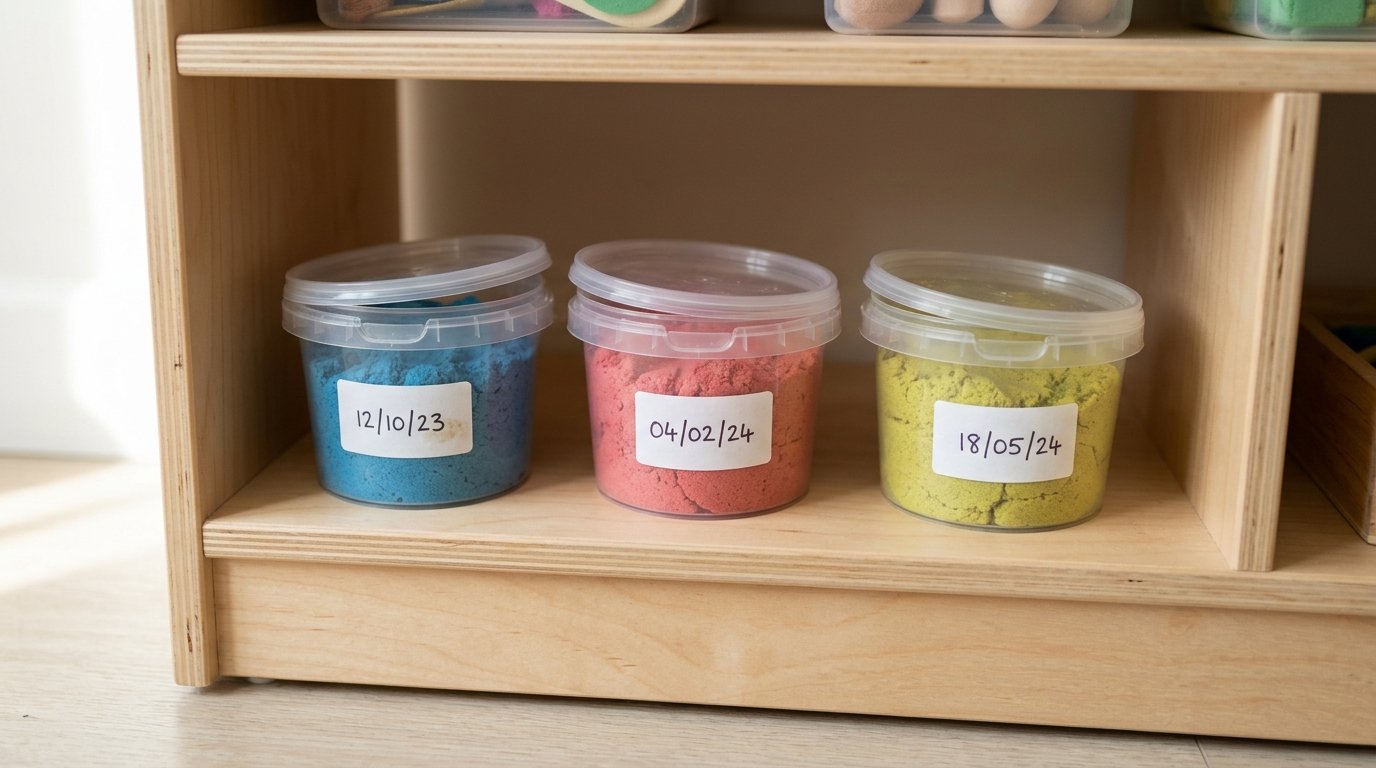
The Sixty-Second Smell Test: What to Do With Your Tub Today
You already have the mapping: the table in section two names each smell family and what it most likely means, and the airing procedure covers the solvent case check by check. What neither of those settles is what to do when the three days change nothing, and what to do with a tub that has clearly spoiled.
The escalation step. A sharp or solvent note that is still sharp at the day-three check is the one case worth taking further. Keep the lot details and your dated notes, contact the retailer, and ask specifically for batch-level test documentation rather than a general certificate. That request is the one a rushed batch or a counterfeit usually cannot answer.
A musty or sour tub needs no escalation and no rescue attempt: bin it, and skip the sanitiser and the vinegar for the reasons already given above.
A smell proves nothing by itself, but it tells you which question to ask and who to ask. Formulation is where most of these answers live, and it is slow work. The company behind this site has 30 years of glass bead research and development, has iterated through more than 20 product upgrades, and holds patented glass microsphere technology. That experience belongs to the material side of the question. What your tub smells like this week is settled by how it was stored, how the batch was made, and what documentation came with it. If you want the material side of the story, start with our writing on formulation and quality control, and keep a dated label on every tub in the meantime.
Frequently asked questions
What can ruin kinetic sand?
Water, heat, and solvents do the most damage. Added water disrupts the binder film and feeds microbes, a radiator, oven, or hot car softens the binder permanently, and alcohol or hand sanitiser strips the silicone coating so the sand crumbles instead of holding a shape. Sealing a damp tub in a warm cupboard completes the list.
Why does kinetic sand smell like vinegar?
Vinegar means acetic acid, another microbial by-product, so the tub has almost certainly been damp. The exception is sand that was actually cleaned with vinegar or lemon juice: the acid leaves the same smell and also attacks the water-repelling surface treatment. Either way, a vinegary tub is not one to keep using with children.