

Sensory play sand has become one of the most popular materials for creative play, classroom activities, and hands-on learning. One reason for its popularity is the wide variety of colors available today.
From classic primary shades to metallic finishes and glow-in-the-dark options, different colors make play sand more engaging and versatile. Parents, teachers, retailers, and activity centers often choose specific color combinations depending on the type of play or educational activity they want to support.
Standard Play Sand Color Palette
Most manufacturers start with a core group of colors that form the foundation of play sand sets.
Common standard colors include:
- Blue play sand
- Green play sand
- Red play sand
- Yellow play sand
- Pink play sand
- Purple play sand
- White play sand
- Black play sand
These eight colors cover most creative needs and are widely used in homes, classrooms, sensory play areas, and therapy environments.
Blue and green are especially popular because they resemble natural elements such as water and grass. Pink and yellow are bright and cheerful, making them common choices for early learning activities.

Key Characteristics of Colored Play Sand
Regardless of color, most sensory play sands share several core characteristics.
Typical properties include:
- Soft and moldable texture
- Easy to shape, cut, and sculpt
- Reusable and long-lasting
- Does not dry out easily
The color differences mainly come from pigments used during manufacturing. Slight shade variations can occur depending on lighting conditions or display screens.
For schools or retailers purchasing in bulk, requesting samples helps confirm the exact color tone before placing large orders.
Specialty and Seasonal Play Sand Colors

Beyond the standard palette, many suppliers offer extended colors designed for themed play kits and creative activities.
Common specialty colors include:
- Orange and brown play sand
- Cyan and turquoise shades
- Lime green and hot pink
- Gold and silver metallic sand
- Glitter-infused play sand
- Glow-in-the-dark sensory sand
Manufacturers also release seasonal color collections throughout the year.
Typical seasonal themes include:
Winter
- White
- Silver
- Icy blue
Spring
- Pastel pink
- Lavender
- Mint green
Summer
- Neon colors
- Bright yellow
- Hot pink
Fall
- Orange
- Brown
- Gold
Rotating seasonal colors helps keep activities fresh in classrooms and daycare environments.
Mixing Play Sand Colors
Mixing colors is one of the most enjoyable parts of sensory play sand. Even a small set of colors can produce many new shades.
Common color combinations include:
| Base Color | Mix With | Result |
|---|---|---|
| Blue | Yellow | Green |
| Red | Blue | Purple |
| Red | Yellow | Orange |
| Pink | Blue | Lavender |
| Green | Yellow | Lime Green |
Mixing tip
Start with small amounts and gradually adjust the ratio. This makes it easier to control the final color and avoid blending too much sand at once.
Educational and Creative Uses of Play Sand Colors
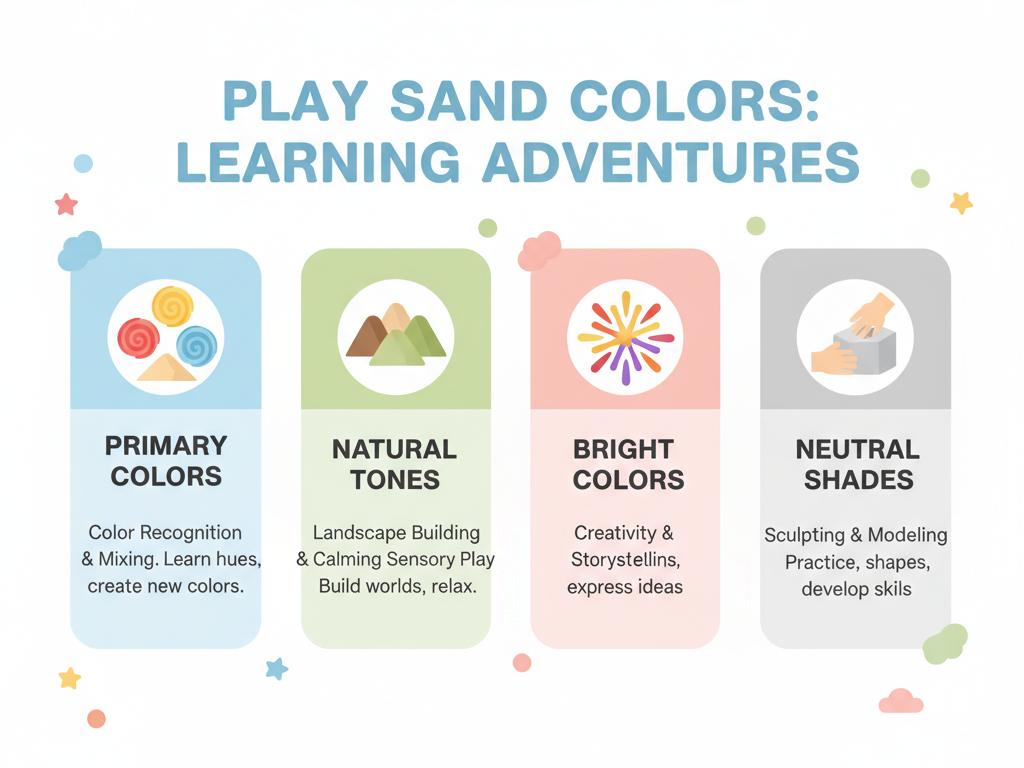
Different colors support different types of learning and play activities.
Primary colors
- Teach color recognition
- Introduce basic color mixing
Natural tones
- Help children build landscapes
- Encourage calming sensory play
Bright colors
- Stimulate imagination
- Support storytelling activities
Neutral shades
- Useful for sculpting and modeling
- Focus attention on shapes and textures
Colored play sand allows children to explore color theory, texture, and spatial awareness through hands-on activities.
Buying Sensory Play Sand in Bulk
For schools, retailers, and activity centers, buying in bulk usually provides better pricing and greater flexibility.
Wholesale suppliers often provide:
- Pre-assorted color packs
- Custom color selection
- Volume-based pricing
- Consistent production batches
Before placing an order, buyers usually confirm:
- Available color options
- Minimum order quantities
- Bulk pricing levels
- Lead times for specialty colors
- Color consistency between batches
Many suppliers can also provide samples so buyers can evaluate texture and color quality before committing to large quantities.
Storage Tips for Colored Play Sand
Proper storage helps maintain both color quality and texture.
Recommended storage practices:
- Store each color in a separate airtight container
- Use clear containers for easy identification
- Keep containers away from direct sunlight
- Avoid accidental mixing during storage
With proper storage conditions, sensory play sand can remain usable for long periods without drying or fading.
Frequently Asked Questions
Choosing the Right Play Sand Colors
Choosing the right play sand colors depends largely on how the sand will be used. Educational programs often benefit from a full color palette that supports color recognition, creative play, and simple mixing activities. Individual users, however, may prefer starting with a few favorite shades that match specific play themes or personal preferences.
A practical approach is to begin with the standard core colors and gradually expand into specialty or seasonal shades as needed. This allows users to balance creativity, variety, and cost while still maintaining a versatile collection of sensory play sand colors.