

Magic sand crumbles instead of holding its shape almost always because the thin oil or hydrophobic coating binding the grains together has been disrupted — either through excessive drying, contamination, or too little pressure during molding. This isn’t a defect in the sand itself; it’s a cohesion problem, and cohesion in moldable sand depends on a delicate balance between coated glass beads, surface tension, and how the material is handled. Once you understand what’s actually holding the grains together, crumbling stops being a mystery and becomes something you can predict and prevent.
What Actually Holds Magic Sand Together in the First Place
Here’s a fact that surprises most first-time users: magic sand doesn’t stick together because it’s wet. In fact, the opposite is true — the material is built to repel water. So what’s creating that satisfying, moldable clump when you press it into a shape?
The answer is a hydrophobic surface coating applied to fine glass beads (or similarly treated grains) during manufacturing. This coating creates weak intermolecular attraction between particles — not true adhesion, but enough surface tension and friction to let grains cling to each other under light pressure. We break this down in more depth in The Science Behind Magic Sand’s Hydrophobic Properties, but the short version is this: cohesion here is mechanical and chemical, not a glue-like bond. That’s exactly why it’s fragile enough to fail under the wrong conditions.
Why This Matters for Crumbling
Because the bonding force is weak by design, it doesn’t take much to disrupt it. Compare that to something like kinetic sand’s polymer-based cohesion — a topic covered in Glass Beads vs Silica Sand: What’s Actually Inside Moldable Play Sand? — and you start to see why different formulations crumble or hold shape differently under identical handling.
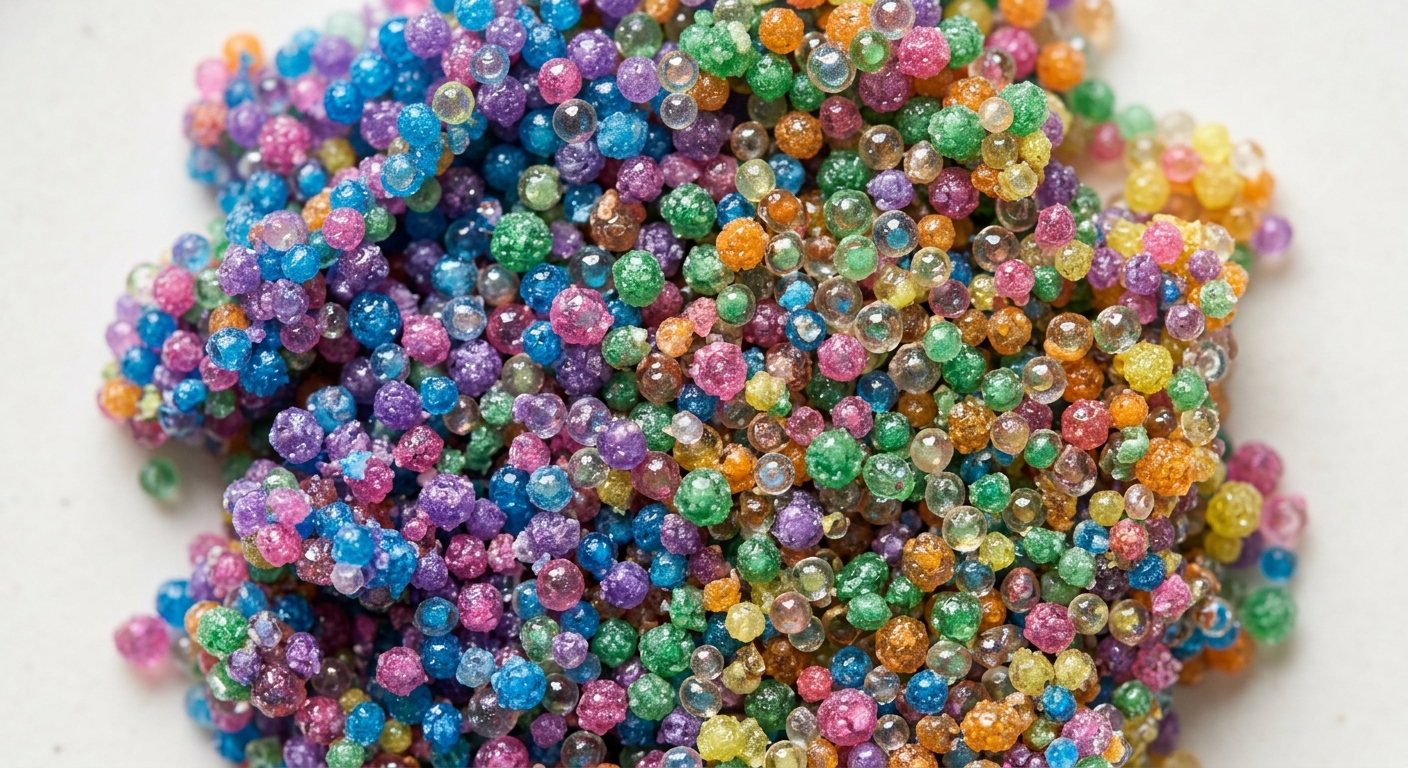
The Four Real Causes of Crumbling — Ranked by Frequency
Not all crumbling is the same, and treating every case the same way is the most common mistake we see. Based on typical usage patterns reported by classrooms and studios, four causes account for almost all cohesion failure.
1. Moisture or Binder Depletion
Repeated handling gradually redistributes the surface coating unevenly across a batch. Grains at the surface of a storage bin, exposed to air movement, lose bonding capacity faster than grains buried deeper. The result: dry, powdery patches that won’t clump no matter how hard you press.
2. Overworking the Material
Ironically, too much kneading can break cohesion rather than build it. Excessive compression can fracture the coating on individual grains, especially in sand that’s already had heavy use. This is common in preschool settings where the same tray gets used daily for weeks without rest.
3. Contamination
A few drops of actual water, food residue, or dust from outside can locally disrupt the hydrophobic layer. You’ll usually see this as sticky, clumpy patches right next to areas that crumble — an uneven mix is the tell-tale sign, not uniform dryness.
4. Insufficient Mass or Pressure in Molds
If you’re layering sand too thin into a mold, there simply isn’t enough material for the weak cohesive forces to hold a structure together against gravity. Thin edges and fine details are almost always the first to crumble.
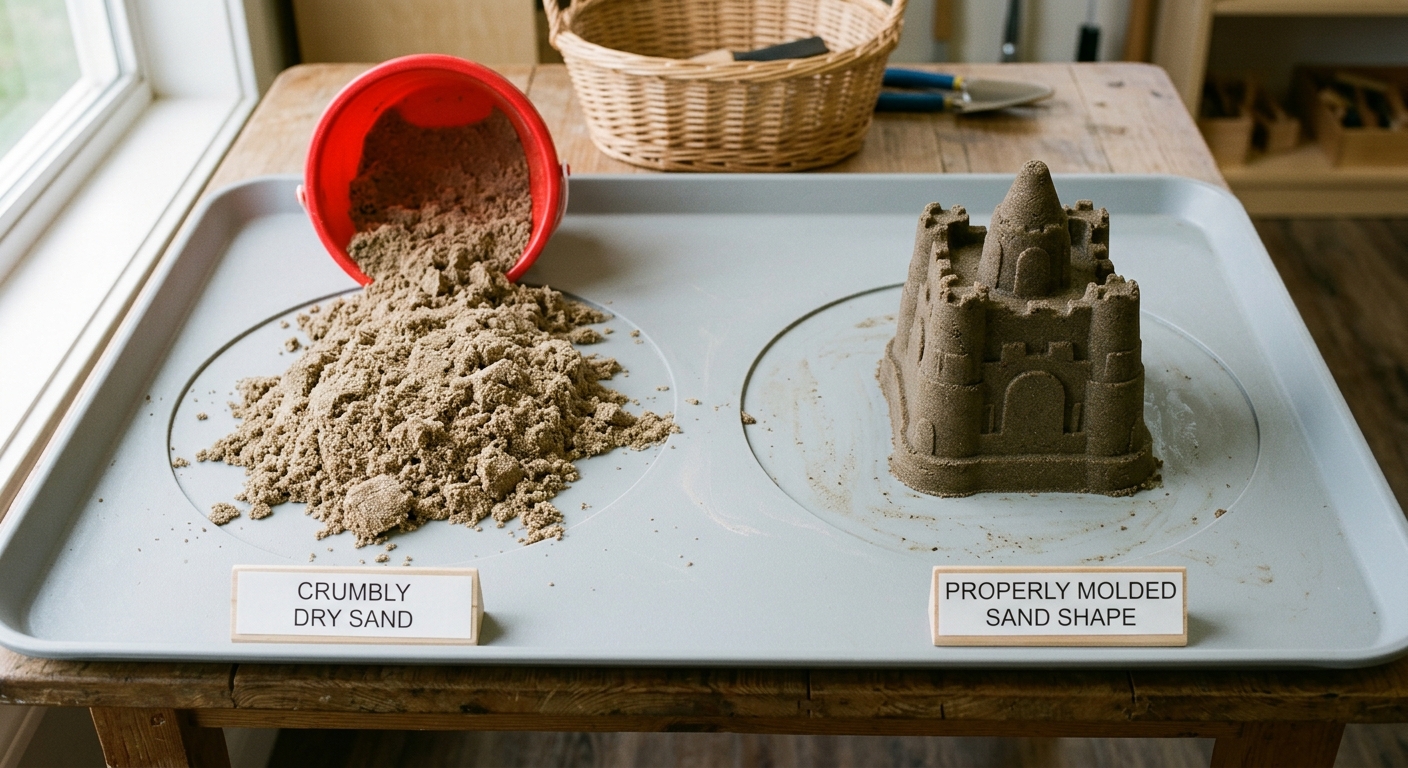
A Classroom Example: Diagnosing Crumbling in Real Time
Consider a Montessori teacher running a sand-molding station three times a week. By week three, half the tray molds beautifully, and the other half crumbles the second a child lifts the mold. What’s going on?
In this scenario, the likely explanation is uneven redistribution — the sand near the tray’s edges gets touched less often and dries out relative to the actively-used center. The fix isn’t buying new sand. It’s a simple weekly ritual: turn and mix the entire tray, redistributing surface-active grains evenly, and store it in a sealed container between sessions rather than leaving it exposed in an open bin overnight.
This kind of practical troubleshooting is exactly what we cover in Designing a Sensory Sand Station for Preschool Classrooms: A Practical Layout Guide, where storage and rotation habits make a measurable difference in day-to-day sand performance.
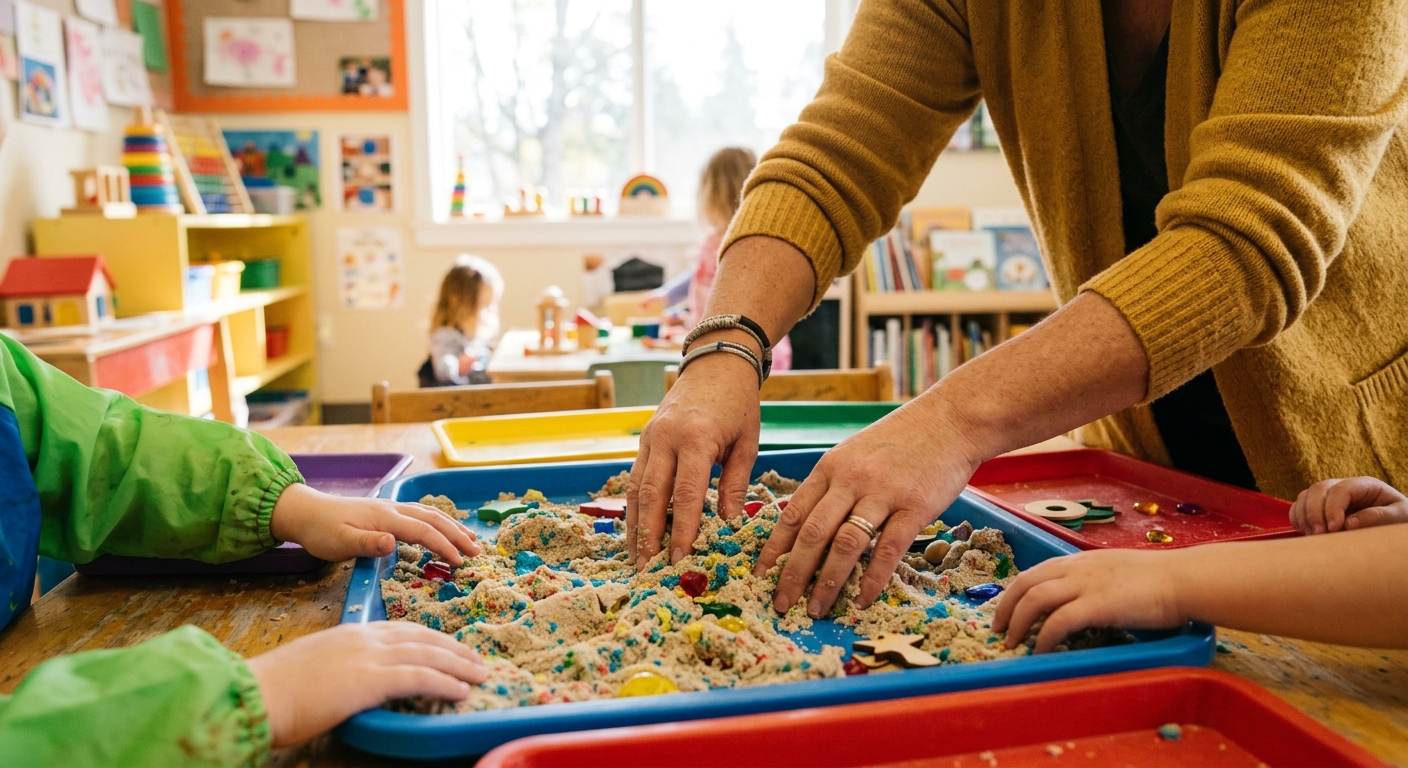
Crumbling vs Stickiness: Two Opposite Problems, Easy to Confuse
People often describe crumbling and stickiness as if they’re the same complaint. They’re not — they’re opposite failure modes, and mixing up the diagnosis leads to the wrong fix.
Crumbly sand has lost cohesion uniformly or lacks enough binder-active surface area. Sticky sand, on the other hand, usually has too much moisture or contamination concentrated in one spot, which changes surface tension in the opposite direction. If you’re dealing with sticky patches instead of crumbling ones, the fixes are different — we cover that scenario in detail in My Sand Got Sticky — 7 Fixes That Actually Work.
Quick Diagnostic Check
Squeeze a handful. If it falls apart instantly and feels powdery, that’s cohesion failure from dryness or overuse. If it clumps unevenly and leaves residue on your fingers, that’s contamination or moisture — a stickiness issue, not a crumbling one.
Storage Habits That Prevent Cohesion Failure Before It Starts
Most crumbling problems are storage problems in disguise. Sand left in open trays overnight is exposed to airflow and temperature swings, both of which accelerate uneven drying at the surface.
- Seal it after use. An airtight container prevents the gradual moisture and binder redistribution that causes patchy crumbling.
- Avoid direct sunlight or heating vents. Heat speeds up surface changes unevenly across a batch.
- Mix periodically, even without visible problems. A quick weekly turn keeps binder-active grains evenly distributed.
- Keep it separate from wet-play materials. Even incidental splashes from a nearby water table can localize contamination.
For a deeper look at why sand dries out over time regardless of handling, see Why Does Sand Dry Out? The Science Behind Long-Lasting Play Sand.
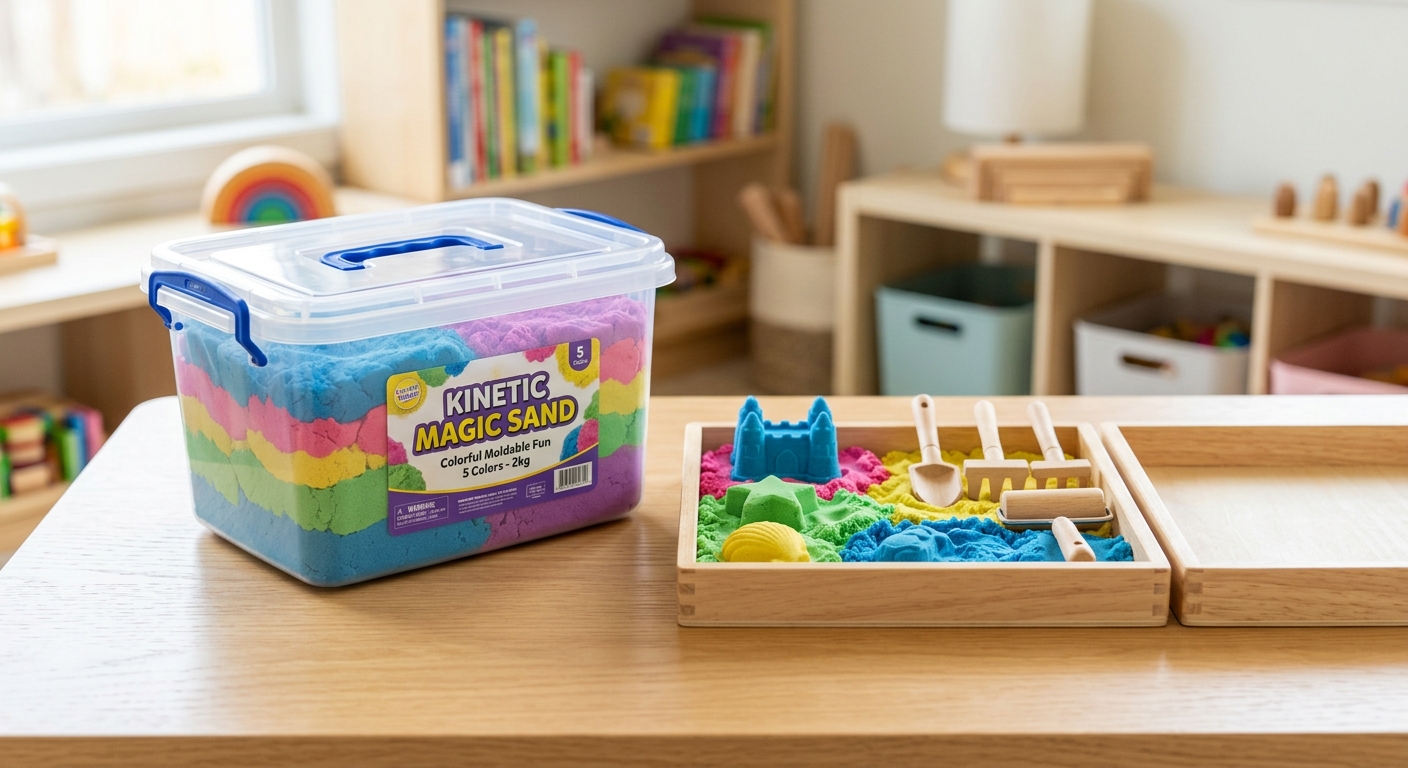
When Crumbling Isn’t Fixable — And What That Tells You
Sometimes crumbling doesn’t respond to mixing, resting, or better storage. If a batch has been heavily overused for months, or exposed repeatedly to contaminants like glitter, glue residue, or food, the coating on individual grains may be permanently degraded rather than just temporarily disrupted.
This is a useful distinction for product developers and educators managing shared classroom supplies: not every performance issue is a technique problem. Understanding the difference between recoverable cohesion loss and genuine material degradation helps set realistic expectations for how long a batch of sand should perform well under regular use — a question we explore further in Kinetic Sand vs Play-Doh vs Slime: Which Sensory Material Actually Lasts?.
Molding Technique Matters More Than People Assume
Even perfectly cohesive sand will crumble if it’s molded incorrectly. This is the section most tutorials skip, and it’s often the actual root cause behind reported “bad batches.”
Pack, Don’t Sprinkle
Firmly pressing sand into a mold — rather than loosely spooning it in — compresses grains into contact with each other, activating the weak cohesive forces that hold a shape. A light sprinkle simply doesn’t generate enough particle-to-particle contact.
Match Mold Size to Sand Volume
Thin, detailed molds (fine lettering, narrow limbs on shapes) are inherently more crumble-prone because there’s less surrounding mass supporting the structure. For classroom use, simpler geometric molds tend to hold up more reliably than intricate designs — something worth factoring into activity planning discussed in 10 Fun and Meaningful Activities Using Magic Sand.