

Quality control in moldable sand manufacturing has almost nothing to do with the foundry-style strength testing used for industrial casting sand. For glass-bead-based play sand, it means checking batch-to-batch consistency of the hydrophobic coating, grain size and dust levels, color bonding, and texture, along with safety-relevant contamination checks, not just whether the sand holds a shape under pressure. If you search this topic, you’ll mostly find patents about metal-casting molds. None of that applies to a preschool sand tray or a toy brand’s sensory kit.
Key takeaways
- Foundry-style sand strength testing has no relevance to glass-bead moldable play sand; the real QC factors are coating consistency, dust, color bonding, and texture.
- Hydrophobic coating consistency should be checked across an entire production batch, not just in a single lab sample.
- Excess dust during pouring or handling is a visible quality signal, not just a cleanup inconvenience, and matters more in enclosed classrooms.
- Manufacturer-reported safety compliance claims, such as adherence to China 3C, SGS, or ASTM standards, are a starting point; ask for the documentation behind them before treating them as proof.
- Glass-bead sand isn’t a mold-growth medium on its own, but moisture control during manufacturing and storage still matters.
Why Foundry-Style Sand Testing Doesn’t Apply Here
Search for ‘sand quality control’ and you’ll land on bentonite content percentages, VDG-Merkblatt test specimens, and compressive strength numbers meant for molten metal molds. That’s a different industry entirely. Foundry sand has to survive a pour of liquid iron without collapsing. Moldable play sand has to feel good in a four-year-old’s hands and not fall apart on a classroom table.
Those two materials don’t even share a formulation family. Foundry sand is clay-bonded silica. Ibiza magic sand’s ingredients are round and smooth glass beads, beeswax, and organic silicone, built around the chemistry behind water-repellent sand rather than binder resin. The glass microsphere technology behind this approach is patented.
So when you’re evaluating a supplier, forget permeability and shake-out testing. The questions that actually matter are about tactile feel, consistency, and whether a child’s hands stay clean.
What Is Moldable Sand Made Of? The Materials Being Controlled
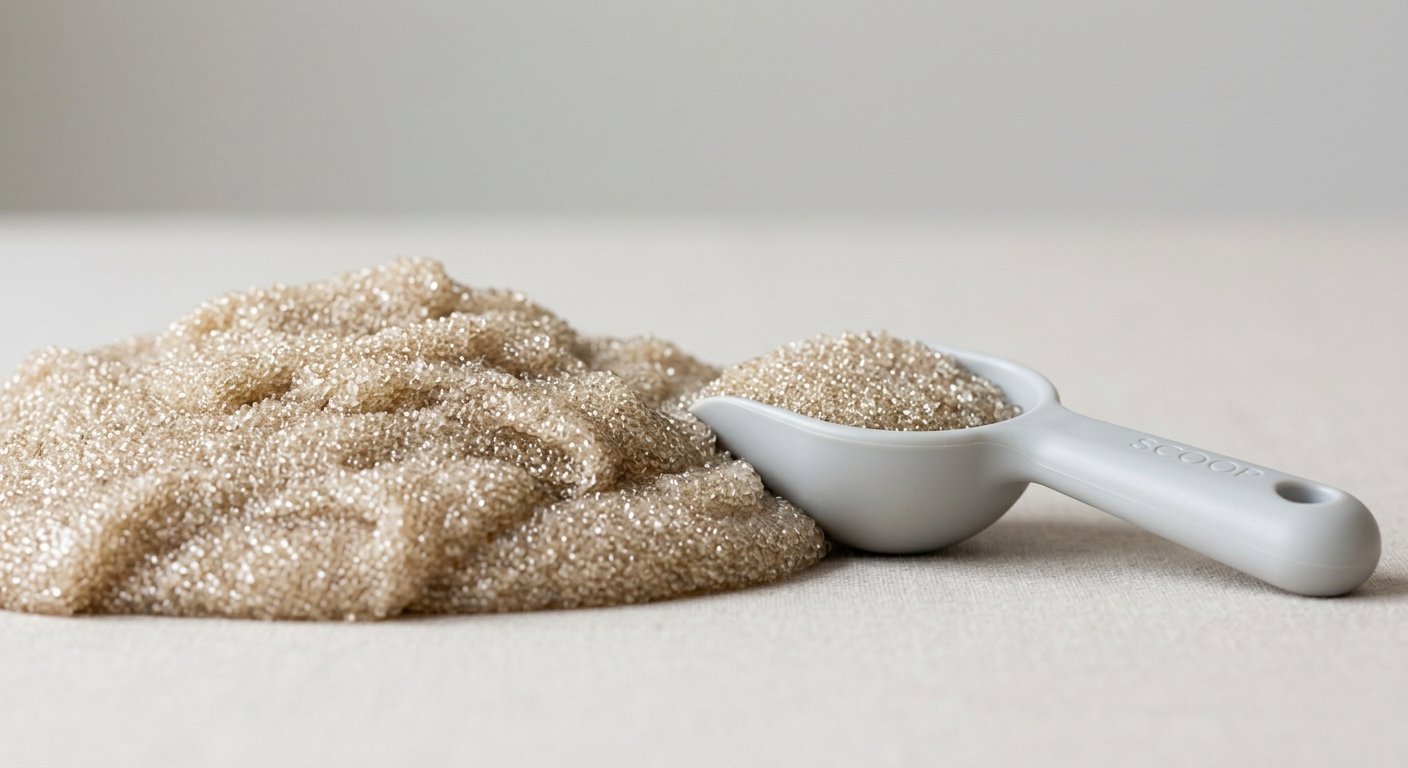
Before any quality check happens, you need to know what’s actually in the mix. Glass-bead moldable sand is built from a small number of components, and each one has its own failure mode if it’s off-spec.
- Round, smooth glass beads form the base structure. Shape consistency here directly affects how the sand flows and packs.
- A hydrophobic surface treatment, typically an organic silicone and beeswax-type coating, is what gives the sand its moldable, water-repellent quality. Ibiza magic sand uses exactly this combination.
- Raw material batches get checked before mixing even starts, because a bad batch of beads or coating material cascades into every downstream problem: dust, stickiness, crumbling.
Worth noting: kinetic sand is a different material family. It’s composed of roughly 98% sand and 2% polymer, usually polydimethylsiloxane (PDMS), a silicone oil. That’s silica sand coated with a liquid polymer, not glass beads with a hydrophobic shell. See glass beads vs silica sand for the full breakdown. Different base, different QC checkpoints entirely.
Grain Size and Particle Distribution: The Table-Stakes Metric
Even in play sand, grain size matters, just not for the reasons a foundry cares about. Uneven bead size creates gritty patches in one spot and loose, won’t-bond sand in another. Pick up a handful from the wrong batch and you’ll feel the inconsistency immediately: smooth in parts, sandy and dry in others.
Industrial sand testing uses sieve analysis to chart distribution curves tied to permeability and strength. For play sand, the equivalent check is simpler and more direct: does a sample scoop feel uniform from edge to edge, not whether it meets a shear-strength threshold.
Oversized or undersized beads also drive up dust generation during handling, which becomes its own quality problem the moment the sand gets poured, scooped, or shaken in a classroom bin. Grain uniformity isn’t a nice-to-have spec on a data sheet. It’s the first thing a hand notices.
Hydrophobic Coating Consistency: The Check Industrial Sand Doesn’t Need
This is the checkpoint nobody writes about, and it’s probably the most important one for play sand. The hydrophobic coating is what lets sand mold into shapes without turning wet or sticky. If that coating goes on unevenly during manufacturing, part of the batch clumps while another part stays loose and dusty, even though both parts came from the same production run.
A practical way to test this in-house: does a handful hold its shape the same way from the top of a batch as from the bottom? That’s a different question from ‘does this sand repel water in a lab test.’ A lab sample can pass while the rest of the run is inconsistent. Coating uniformity across the whole production run is the real target.
Magic Sand is crafted from glass beads using environmentally friendly materials. If you’re evaluating a supplier, ask specifically how they verify coating consistency between batches, not just whether the product is labeled hydrophobic. Anyone can claim hydrophobic. Fewer can show you how they check it run after run. See also why magic sand crumbles instead of holding shape when this step goes wrong.

Color Stability and Dye Bonding Checks
Color QC for sensory sand isn’t about whether a color looks vibrant on day one. It’s about whether the pigment stays bonded to the bead surface after repeated handling. A dye that looks great in the bag but rubs off on fabric or skin within a week is a quality failure, even if nobody flags it that way.
A simple buyer-side check: rub dry sand against light fabric or skin a few times and see if color transfers. If it does, that’s a bonding problem, not a design choice. For a deeper look at how this is engineered, see how color pigments are bonded to sand without transferring onto hands or fabric.
Batch-to-batch color consistency matters just as much. A preschool reordering refill sand or a toy brand matching retail packaging expectations needs the new batch to look like the last one. Color drift between production runs is a quality signal worth asking suppliers about directly.
Dust, Particulate Levels, and Indoor Air Considerations
Dust gets dismissed as a cleanup nuisance, but it’s actually a measurable quality defect. Excess dust usually signals an inconsistency in the coating or in bead quality, not just ‘the sand is dry.’ A well-formulated batch generates noticeably less airborne particulate when handled.
This matters more in an enclosed preschool classroom than in an open craft studio with good ventilation. A dusty batch that’s tolerable in a workshop setting can be a real problem in a small, carpeted classroom used daily.
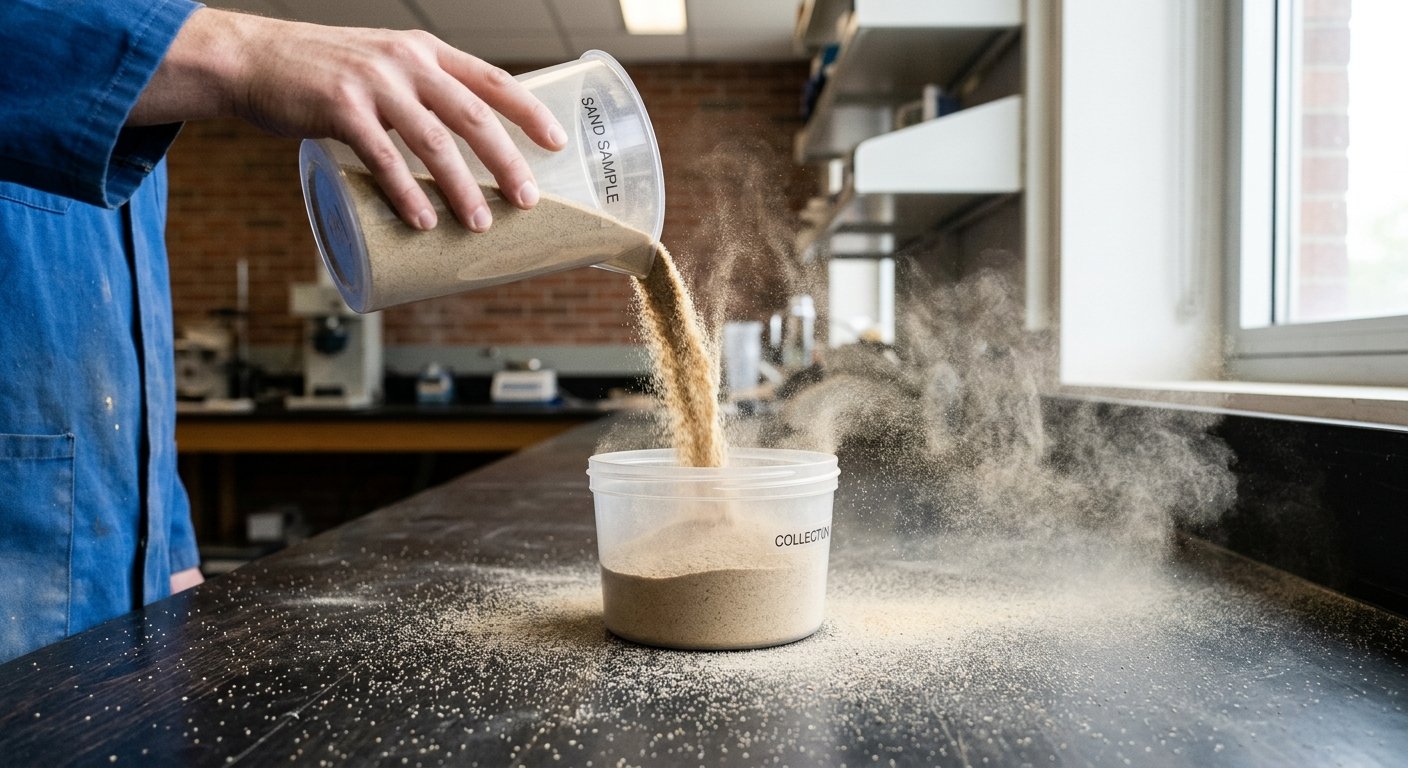
A basic check buyers can run themselves: pour sand from one container to another over a dark surface and watch for a visible dust cloud or fine residue. If you see a haze or a dusty film, that’s a tangible, visible quality signal, no lab equipment required. For a broader look at how dust and cross-use affect play quality over time, see sensory sand and contamination.
Contamination and Safety-Relevant Checks: What Can You Verify?
Manufacturer-reported compliance claims are a starting point, not proof on their own. When a company states its sand complies with China 3C, SGS, ASTM, and other international safety standards, or that it meets American and European safety standards, that’s useful information, but it’s the company describing its own process. Independently verified test results, where you can actually see the documentation, carry more weight than a claim on a product page.
What a buyer can reasonably ask for: the actual documentation behind a safety standard claim, not just a logo or a mention in marketing copy. As a general rule, any list of certifications is most useful when a buyer can trace which certification covers which specific claim, rather than treating the count alone as proof.
It’s also worth being direct about the limits here: no single article, and no single certification, can confirm a product is universally safe for every age group or every use case. If you’re buying for a specific classroom or age range, check current documentation against your actual use case rather than assuming a general compliance statement covers it. Magic Sand is also described as odorless, which is a manufacturer-reported detail worth confirming against your own sample before large-scale classroom adoption.
Can Moldable Sand Get Moldy? What QC Has to Prevent
Glass-bead sand itself isn’t an organic growth medium the way damp natural sand or a starch-based homemade recipe can be. The base material doesn’t give mold much to feed on. That said, contamination risk comes more from moisture introduced during use or storage than from the sand itself, which makes this partly a usage issue and partly a manufacturing one.
Manufacturing-stage moisture control during mixing and packaging still matters, even for a product designed to repel water. If moisture gets sealed into a batch during packaging, that’s a storage-and-handling problem waiting to surface later, regardless of how good the hydrophobic coating is. Proper sealed storage after use remains the best prevention step on the buyer’s side, something worth covering with any classroom or retail staff handling the product day to day.
What to Ask When Evaluating a Moldable Sand Supplier
If you’re a school director, toy brand buyer, or product developer deciding who to trust, go in with a specific checklist rather than general questions.
- Ask how hydrophobic coating consistency is verified across an entire production batch, not just in a single sample pulled for marketing photos.
- Ask which specific test method or lab produced any safety certification on file, and whether the results are current.
- Ask about dust and particulate handling specifically for classroom or indoor use, since that’s rarely addressed unless you raise it.
- Ask about color bonding testing and batch-to-batch color matching if you’re ordering refills or matching retail packaging.
magicsandfactory has 10+ years of experience, and IBIZA brings 30 years of specialization in glass bead R&D and manufacturing to that history. The company documents compliance with standards including China 3C, SGS, and ASTM, and offers OEM/ODM services for buyers who need a specific formulation. Treat that as a starting point for your own evaluation, not a replacement for asking these questions directly. Learn more on the about us page.

Frequently asked questions
Can kinetic sand get moldy?
Kinetic and glass-bead moldable sand aren’t organic growth mediums on their own, so mold growth from the base material is unlikely. The real risk comes from moisture introduced during use or storage, such as sealing damp sand in a container. Proper drying before storage and sealed, dry containers reduce this risk significantly.
What is moldable sand made of?
Glass-bead moldable sand, like Ibiza magic sand, is made from round, smooth glass bead microspheres coated with a hydrophobic surface treatment, often an organic silicone and beeswax-type formulation. This differs from kinetic sand, which is roughly 98% silica sand combined with 2% polymer, typically PDMS silicone oil.
What can I use instead of kinetic sand?
Glass-bead-based moldable sand is a common alternative, using a different base material and coating than kinetic sand’s silica-and-polymer formulation. Other alternatives include sand clay, playdough, or natural moist sand for molding, though each has different texture, durability, and cleanup characteristics worth testing before classroom or retail use.
How do you make moldable sand?
Commercially, moldable sand is manufactured by coating glass bead microspheres with a hydrophobic surface treatment under controlled conditions to ensure even coating coverage across a batch. Homemade versions typically mix sand with cornstarch and oil, but these lack the consistency and water-repellent properties of a manufactured hydrophobic coating.