

Magic sand looks like a trick, but it demonstrates a real materials concept: hydrophobic surfaces resist wetting. In this science project, you will compare magic sand vs regular sand using controlled tests, record results, and explain what changes when you disrupt the effect with dish soap.
What Makes Magic Sand Hydrophobic
Magic sand is regular sand coated with a water-repelling material. That coating changes how water interacts with each grain, so the sand can stay dry even when it sits underwater.
Regular sand has no coating, so water easily wets the grain surfaces and quickly fills the spaces between grains.
What You Expect to See With and Without Soap
If the sand grains have a hydrophobic coating, water will not wet the grain surfaces easily. The sand should trap a thin layer of air between grains, which helps it form underwater shapes and look dry when you lift it out.
If you add dish soap, the effect should weaken. Soap helps water spread, so water should wet the coated grains more easily and the sand should start behaving more like regular sand.
Materials for a Hydrophobic Sand Test
- Magic sand
- Regular sand
- 2 clear cups or jars
- Water
- Spoon
- Paper towels
- Dish soap
- Timer or phone stopwatch
- Notebook for data
Side-by-Side Setup for a Fair Comparison
- Label two cups: A (Regular Sand) and B (Magic Sand).
- Fill both cups with the same amount of water.
- Measure the same amount of sand for each test, such as 2 tablespoons.
Keeping the water volume and sand amount the same makes the comparison more reliable.
Underwater Behavior Test: Magic Sand vs Regular Sand
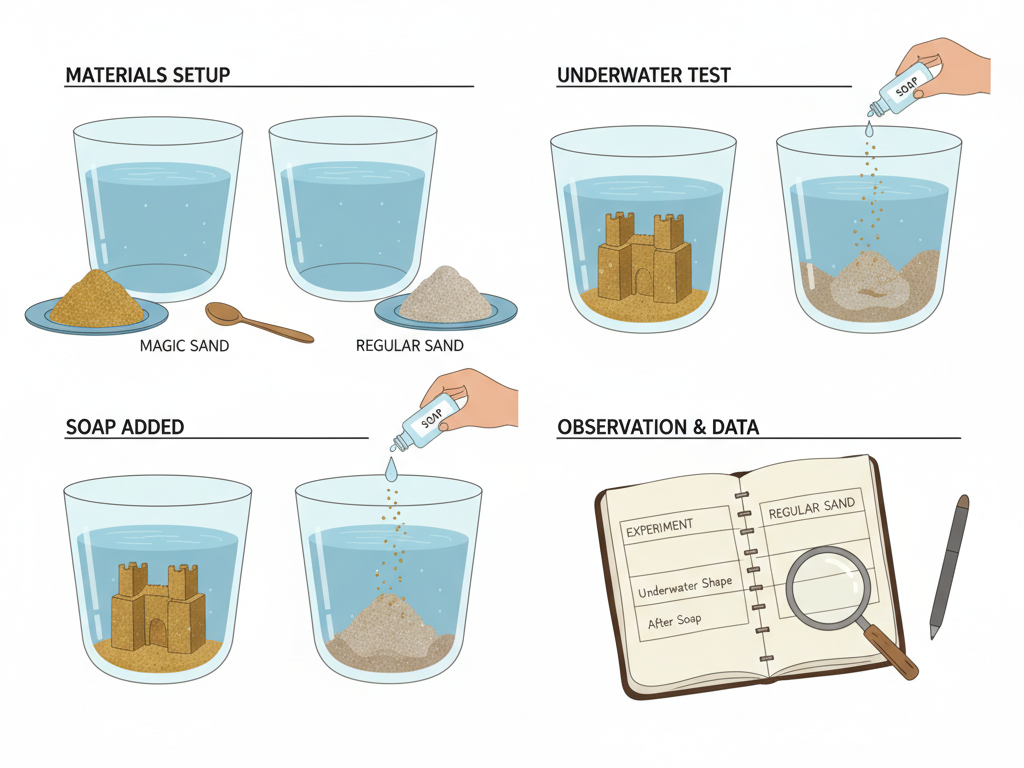
Procedure
- Add regular sand to Cup A.
- Add magic sand to Cup B.
- Watch both cups for 60 seconds.
- Stir each cup gently for 10 seconds.
- Watch for another 60 seconds.
- Scoop out a small sample from each cup onto separate paper towels. Observe how wet each sample looks and feels.
What to observe
- Does the sand clump or stay grainy?
- Does it hold an underwater mound or shape?
- Does it look dry when removed from water?
- Does it spread quickly or stay together?
Soap Breakdown Test: How Soap Changes the “Magic”
Procedure
- Keep both cups from the first test.
- Add 3–5 drops of dish soap to Cup B with magic sand.
- Stir gently for 10 seconds.
- Watch for 60 seconds.
- Scoop out a sample of the magic sand and compare it to the sample you observed earlier.
What to observe
- Does the magic sand start to clump more?
- Do underwater shapes collapse faster?
- Does it feel wetter on the paper towel?
Record Your Results: What to Measure and How
Use quick notes plus a simple table. Try to describe what you see using the same words each time.
| Test | Condition | Clumping | Underwater shape holding | Looks dry when removed | Notes |
|---|---|---|---|---|---|
| 1 | Regular sand + water | ||||
| 1 | Magic sand + water | ||||
| 2 | Magic sand + water + soap |
If you want a stronger project report, repeat each condition 3 times and compare patterns, not one-time results.
What You Change, What You Measure, What You Keep the Same
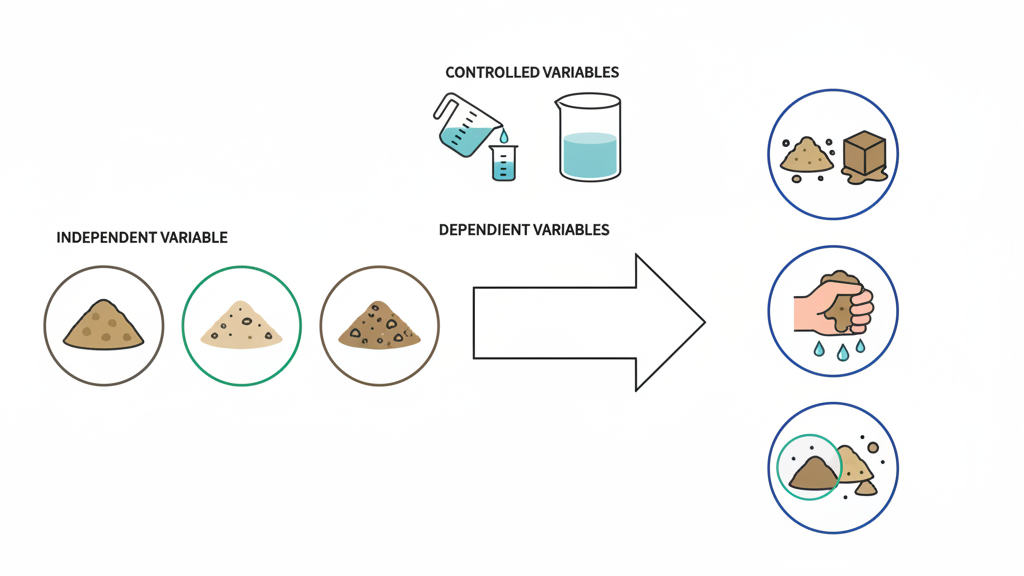
What you change
- Sand type in the first test
- Adding dish soap in the second test
What you measure
- Clumping behavior
- Ability to hold an underwater mound or shape
- Wetness after removal
- Time for underwater shapes to collapse
What you keep the same
- Cup size and water volume
- Amount of sand
- Stirring time
- Observation time
- Soap brand and number of drops
Explain the Results: Trapped Air, Wetting, and Surface Tension
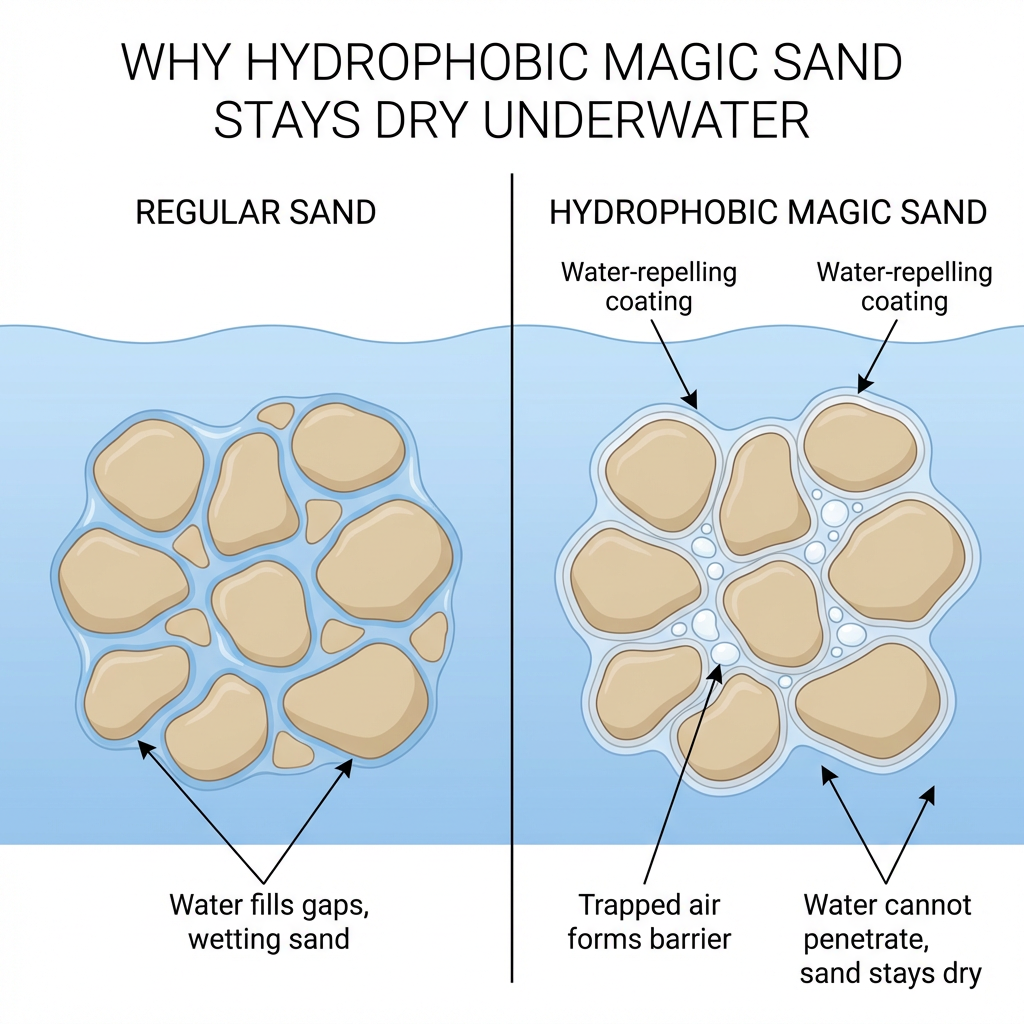
Hydrophobic coating blocks wetting
Water usually spreads across a surface when it can stick to it. On coated sand, water has a harder time sticking, so it does not wet the grains easily.
Trapped air helps it stay dry underwater
Because water does not fill the spaces between grains as easily, the sand can trap air. That air layer helps the sand form soft underwater shapes and look dry when you lift it out.
Soap changes the result
Dish soap reduces surface tension and helps water spread. When water spreads better, it can wet the coated grains more easily. As the grains become wetted, the sand loses the underwater shape-holding behavior and starts acting more like regular sand.
Conclusion
Magic sand behaves differently because a hydrophobic coating changes how water wets the sand grains. The coating helps trap air between grains, so the sand can form underwater shapes and appear dry when removed. When you add dish soap, water spreads more easily, the coating becomes easier to wet, and the magic effect weakens.