

If you want the short answer: kinetic sand lasts longer than Play-Doh and slime — usually by years, not weeks. A properly stored tub of kinetic sand stays soft and moldable for 2–5+ years because it never truly dries out, while Play-Doh hardens within weeks once opened and most homemade or store-bought slime loses its stretch in under a month. That said, “lasting” isn’t the only thing that matters, so here’s the full breakdown.
Why Lifespan Is the Wrong Question (and the Right One)
Parents ask “which lasts longest?” but the real question is “which keeps my kid engaged without turning into landfill in a month?” Those are different things.
Play-Doh can technically last if you baby it — sealed in its original pot, kept cool, no crumbs mixed in. In practice? A four-year-old mixes the red and yellow, forgets to close the lid, and within 10 days it’s a rock. Slime has an even shorter honeymoon: the polymer bonds break down as the material picks up skin oils, dust, and lint, and within two to three weeks most slime turns grainy or liquefies.
Kinetic sand plays a different game entirely. The silicone oil that coats each grain doesn’t evaporate the way water does in Play-Doh. That’s the chemistry behind its staying power, and we cover it in detail in the chemistry behind kinetic sand.
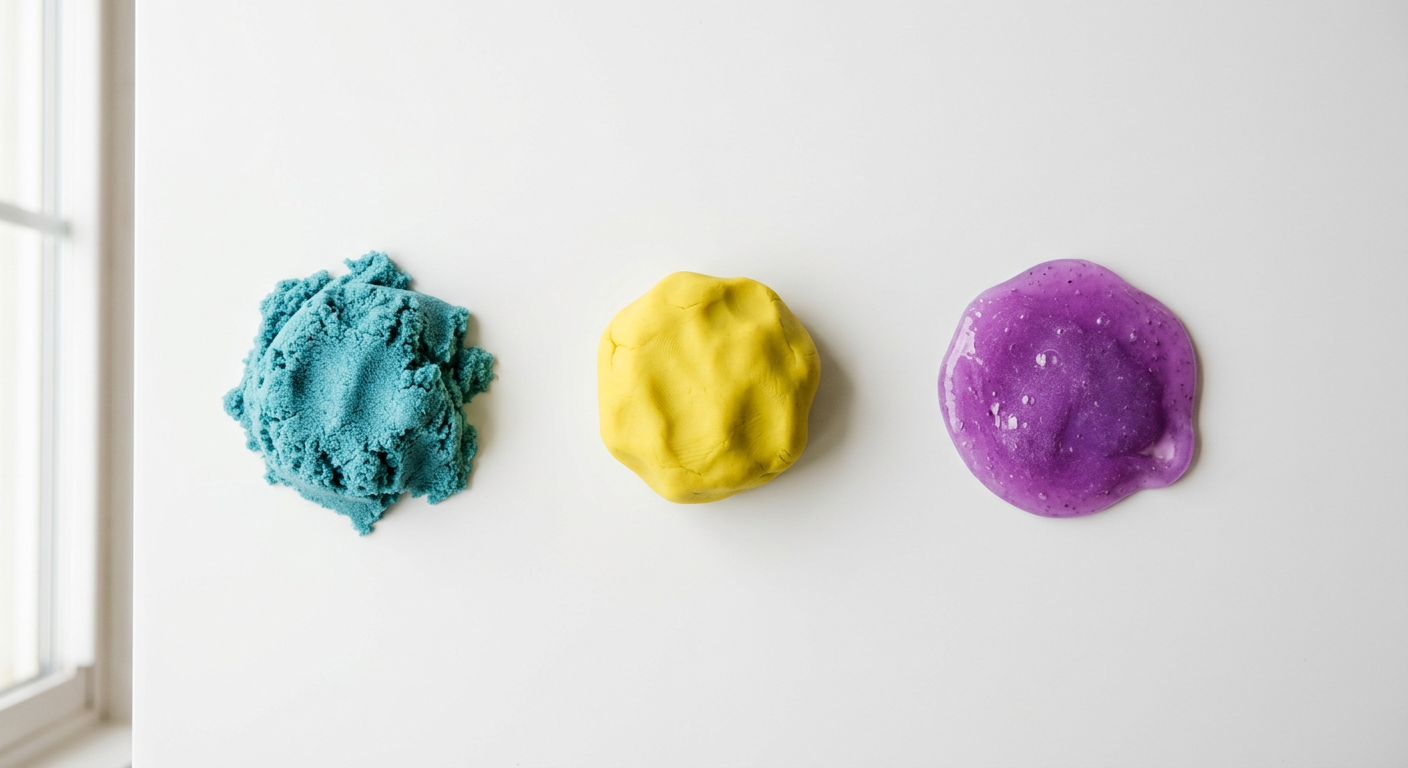
The Durability Showdown: Side-by-Side
Here’s how the three materials stack up on the metrics that actually matter when you’re opening your wallet at the store.
| Criteria | Kinetic Sand | Play-Doh | Slime |
|---|---|---|---|
| Typical lifespan | 2–5+ years | 2–4 weeks open | 1–4 weeks |
| Dries out? | No | Yes, quickly | Yes, turns crusty |
| Mess on carpet | Easy cleanup | Hard once dried | Very hard |
| Cost per month of use | $1–2 | $3–5 | $4–8 |
| Best age range | 4–10 | 2+ | 6+ |
Notice the cost-per-month row. A $15 tub of kinetic sand used for two years costs roughly $0.63 per month. A $4 Play-Doh set replaced every three weeks costs closer to $5.70 per month. Multiply that across a household with two kids and the math gets interesting fast.
Why Kinetic Sand Doesn’t Dry Out
Play-Doh is 80% water, flour, and salt. Slime relies on borate or psyllium bonds holding water in a polymer matrix. Both are fighting evaporation from the moment you open them.
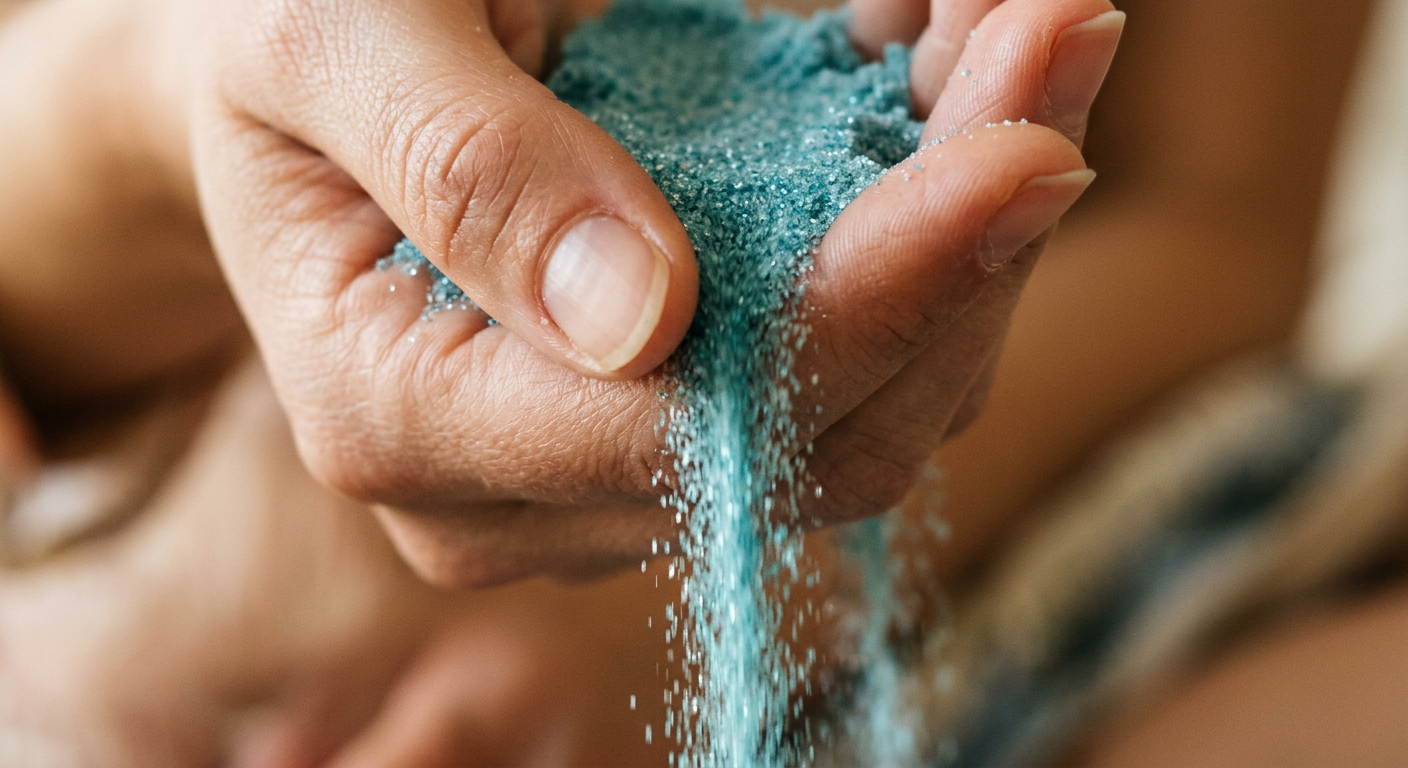
Kinetic sand is about 98% fine-grain sand coated with roughly 2% polydimethylsiloxane — a silicone oil. Silicone oil doesn’t evaporate at room temperature. It doesn’t react with oxygen. It doesn’t care if the lid is half-open. That’s why kids can leave kinetic sand on a play tray overnight and it’s still perfect the next morning, while Play-Doh left out for the same eight hours is a sad little brick.
Curious about the deeper science? What’s in magic sand walks through the polymer coating in plain language.
Mess and Cleanup: The Hidden Cost No One Warns You About
Lifespan is one cost. Vacuum bags and ruined sofa cushions are another.
Slime is the worst offender by a long shot. Once it sticks to carpet fibers or a wool sweater, you’re looking at vinegar soaks, ice cubes, or a pair of scissors. Play-Doh isn’t sticky, but it crumbles — and those crumbs dry overnight into cement-hard flecks that resist vacuuming.
Kinetic sand behaves almost magically here: it’s cohesive. It clumps to itself more strongly than it sticks to fabric or flooring. Drop a handful on hardwood and you can scoop it up by pressing a bigger ball of sand onto it. The sand essentially picks itself up.
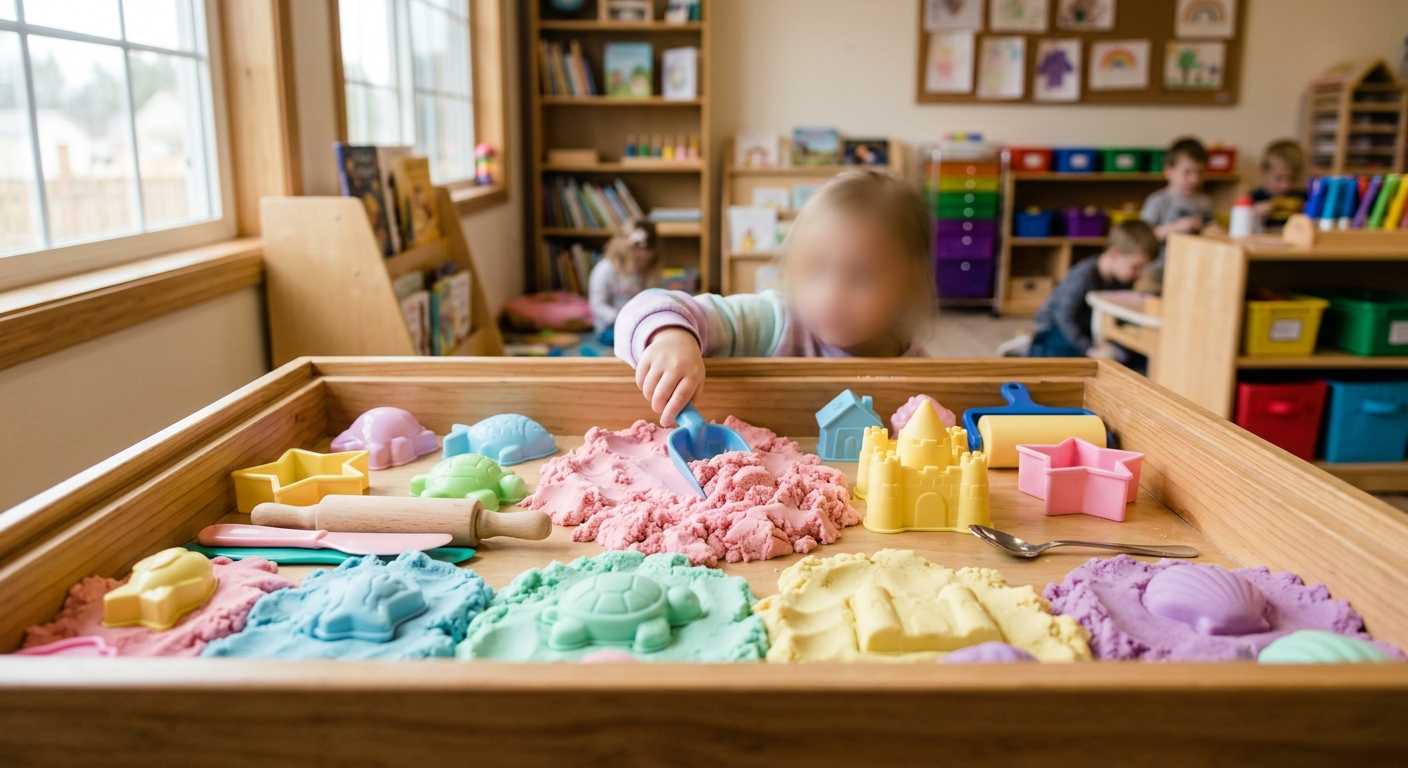
For example, a preschool teacher we work with swapped out her sensory table from slime to kinetic sand and cut cleanup time from 15 minutes to about 3 — enough of a difference that the director approved sand tables for every classroom.
Sensory and Developmental Benefits — They’re Not Identical
All three materials build fine motor skills, but they train different muscles and different kinds of focus.
Play-Doh
Best for pinching, rolling, and shaping. The resistance works small hand muscles — great for pre-writing skill development in ages 2–5.
Slime
Stretching and pulling. Slime is the most “fidget-like” of the three, which makes it popular for older kids and even anxious adults. The downside: it’s more about sensory release than creative building.
Kinetic Sand
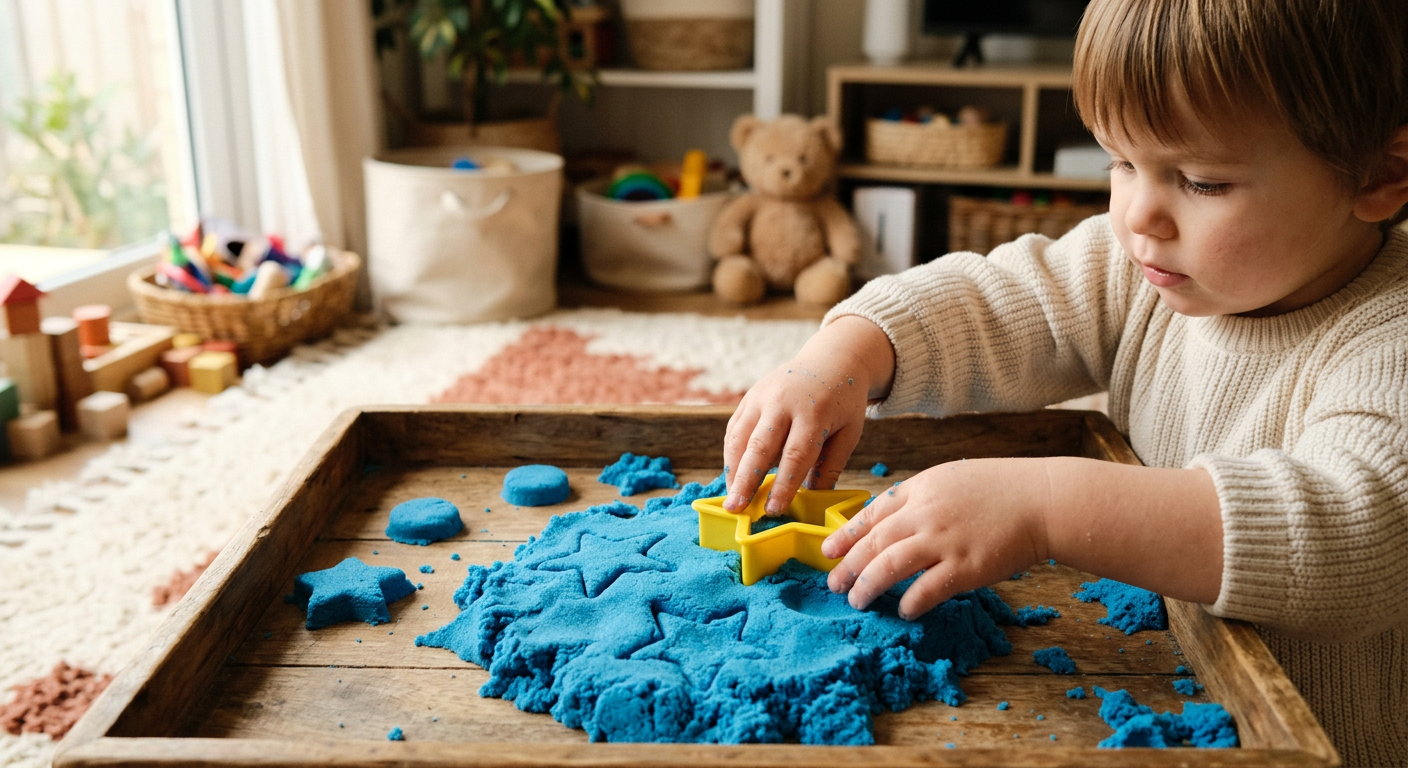
Molding, cutting, and sculpting. It holds shape better than slime but flows more freely than Play-Doh, which opens up a wider range of creative play activities — castle building, letter imprints, layered color designs. It also bridges the gap between wet sand at the beach and dry kinetic play at home.
Safety and Ingredient Concerns
This is where slime takes a real hit. Many DIY slime recipes use borax, and even commercial slimes use sodium tetraborate derivatives that have raised concerns at high exposure levels. The CPSC has flagged multiple slime brands over the past few years for boron content exceeding EU limits.
Play-Doh is non-toxic but contains gluten (wheat flour) and high salt — worth knowing if your child has celiac disease or if a pet might eat it. A single pot can contain enough salt to be dangerous for a small dog.
Kinetic sand is non-toxic, gluten-free, and hypoallergenic in most formulations. The silicone oil used is the same grade used in cosmetics. For wholesale buyers verifying safety certifications, our guide to choosing a kinetic sand supplier covers what EN71 and ASTM F963 certifications actually mean.
Real-World Scenarios: Which One Should You Actually Buy?
Different households, different answers. Here’s how I’d steer people.
Toddlers (ages 2–3)
Play-Doh wins. It’s cheap enough to replace, forgiving if eaten (don’t let them, but accidents happen), and the soft texture suits small hands that haven’t built up dexterity yet.
Kids ages 4–10
Kinetic sand, hands down. The longer lifespan, lower mess, and wider range of creative play make it the best value. Pair it with a molds-and-tools playset and you’ve got months of unprompted play.
Tweens and teens looking to fidget
Slime or kinetic sand both work. Slime edges ahead for stress-relief stretching; kinetic sand wins for quiet concentration work.
Classrooms, therapy clinics, and retail
Kinetic sand is the only practical option at scale — Play-Doh turnover costs are brutal and slime liability is too high. This is why most sensory OT clinics have standardized on sand. If you’re sourcing in volume, our wholesale buyer’s guide breaks down bulk pricing.
Storage Tricks That Actually Extend Lifespan
You can push any of these materials beyond their average life with a few habits.
- Play-Doh: Press it firmly back into the pot to remove air pockets. If it’s starting to dry, knead in a few drops of water and wrap in a damp paper towel inside the container for 24 hours.
- Slime: Store in an airtight glass jar, not plastic — glass doesn’t leach plasticizers that accelerate breakdown. Keep it cool; heat kills the polymer bonds.
- Kinetic Sand: Honestly, you barely need to try. Any sealed container keeps it fresh for years. The only real enemy is contamination — keep crumbs, water, and actual beach sand out.
One customer told us they’ve been using the same 2kg tub of kinetic sand for over four years across two kids. That’s the kind of value you don’t get from consumable play materials.
The Verdict — and Where to Go From Here
If you want one material that lasts, stays clean, and keeps kids engaged across a wide age range, kinetic sand is the clear winner. Play-Doh holds its place for toddlers and short-burst creative projects. Slime is a niche pick — great for fidgeting, rough on carpets, and short-lived.
The best strategy for most families isn’t to pick one, it’s to rotate: Play-Doh for quick sculpting sessions, a small slime stash for stress release, and a larger tub of kinetic sand as the everyday sensory staple.
Browse our sensory play collection to see why kinetic sand keeps winning the durability argument — or get in touch if you’re sourcing for a school, clinic, or retail shelf and want sample tubs before committing to volume.