

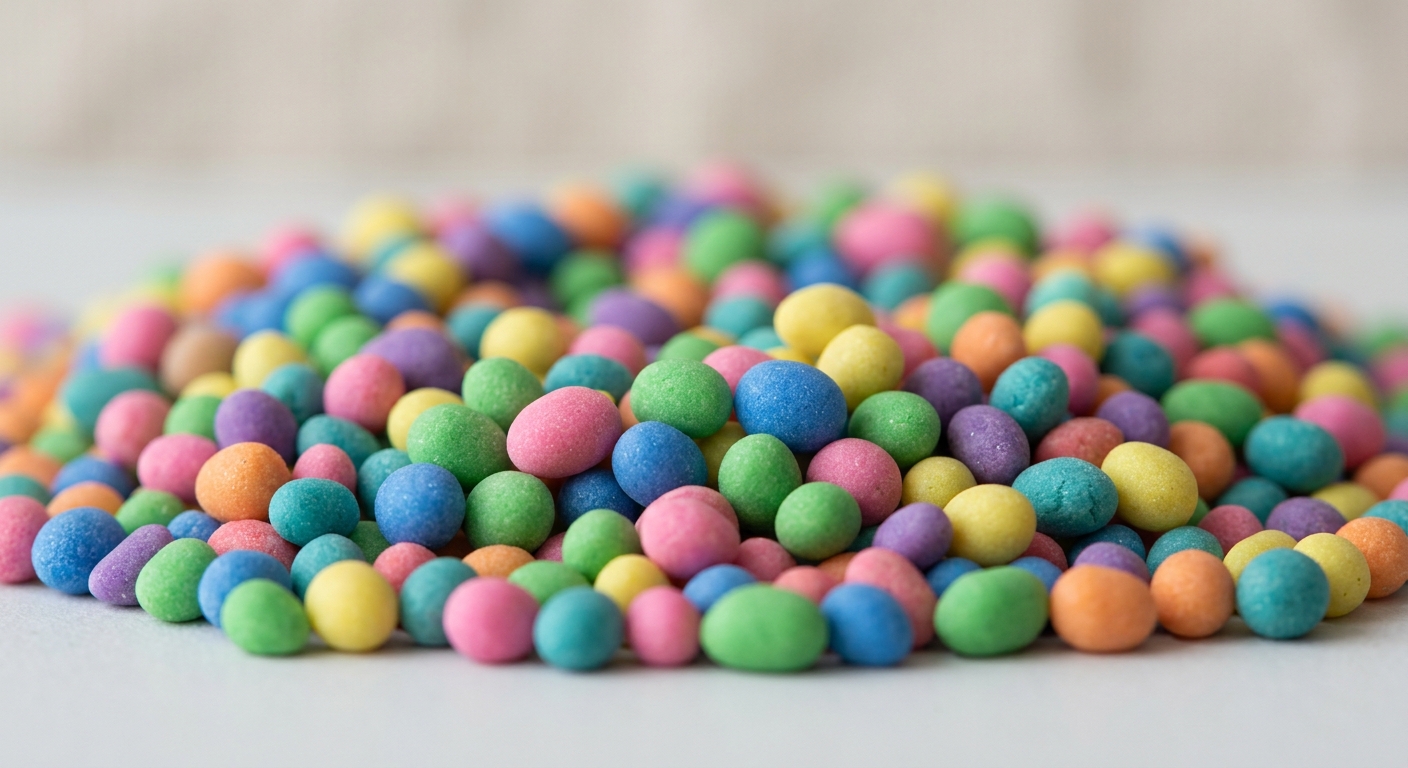
Color pigments stay on the sand grain — not on your hands — because they’re locked underneath a hydrophobic surface coating rather than dusted on top of it. Manufacturers mix the pigment into the coating formula before it’s applied to the grain, so the color becomes part of the shell itself instead of a loose layer sitting on the surface. That’s the difference between sand that stains a school uniform and sand that doesn’t.
Why Loose Pigment Is the Real Problem, Not the Color Itself
Here’s a mistake a lot of people make: they assume color transfer is about how much pigment is used. It’s not. It’s about where that pigment sits relative to the grain surface.
If pigment is simply dusted onto sand grains after the fact — sprayed on and left to dry without a binding layer — it behaves like chalk dust. Rub two grains together, and pigment particles flake off. Press it with a warm palm, and some of that pigment migrates onto skin oils. That’s exactly what happens with cheaply produced colored sand: bright in the bag, disappointing on the carpet.
Bonded pigment works differently. It’s encapsulated within the same coating step that gives the sand its moldable, cohesive texture. The pigment isn’t an afterthought — it’s built into the shell chemistry from the start.
The Coating Process: Where Pigment Actually Gets Bonded
Most quality moldable sand starts as fine silica or glass-bead cores that go through a coating stage using a hydrophobic polymer, often a polydimethylsiloxane (PDMS)-based treatment. This is the same treatment discussed in our breakdown of hydrophobic sand chemistry — but color adds another layer of engineering.
Pigment Pre-Mixing
Manufacturers blend pigment particles into the liquid coating solution before it ever touches the sand. Instead of applying color as a separate spray pass, pigment molecules are suspended evenly through the same silicone-based liquid that will form the water-repellent shell.
Simultaneous Application
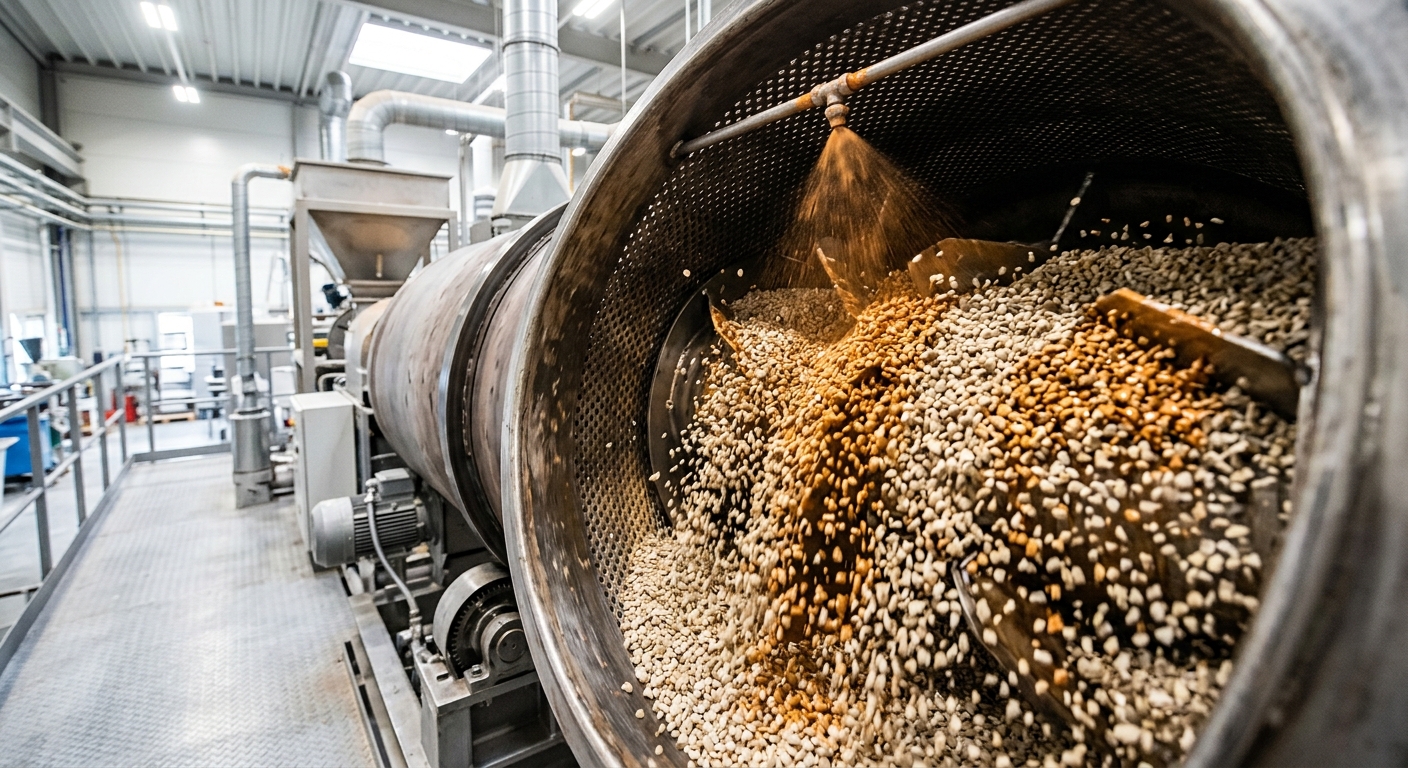
As the coating cures onto each grain — typically through low-heat tumbling or spray-coating drums — pigment gets trapped inside that curing shell. Once it hardens, pigment particles are physically sealed beneath a continuous hydrophobic film, not sitting exposed on top of it.
Think of it like enamel paint on a ceramic mug versus a sticker slapped on the outside. One is fused into the surface. The other peels.
Why Hydrophobic Coating Doubles as a Color Lock
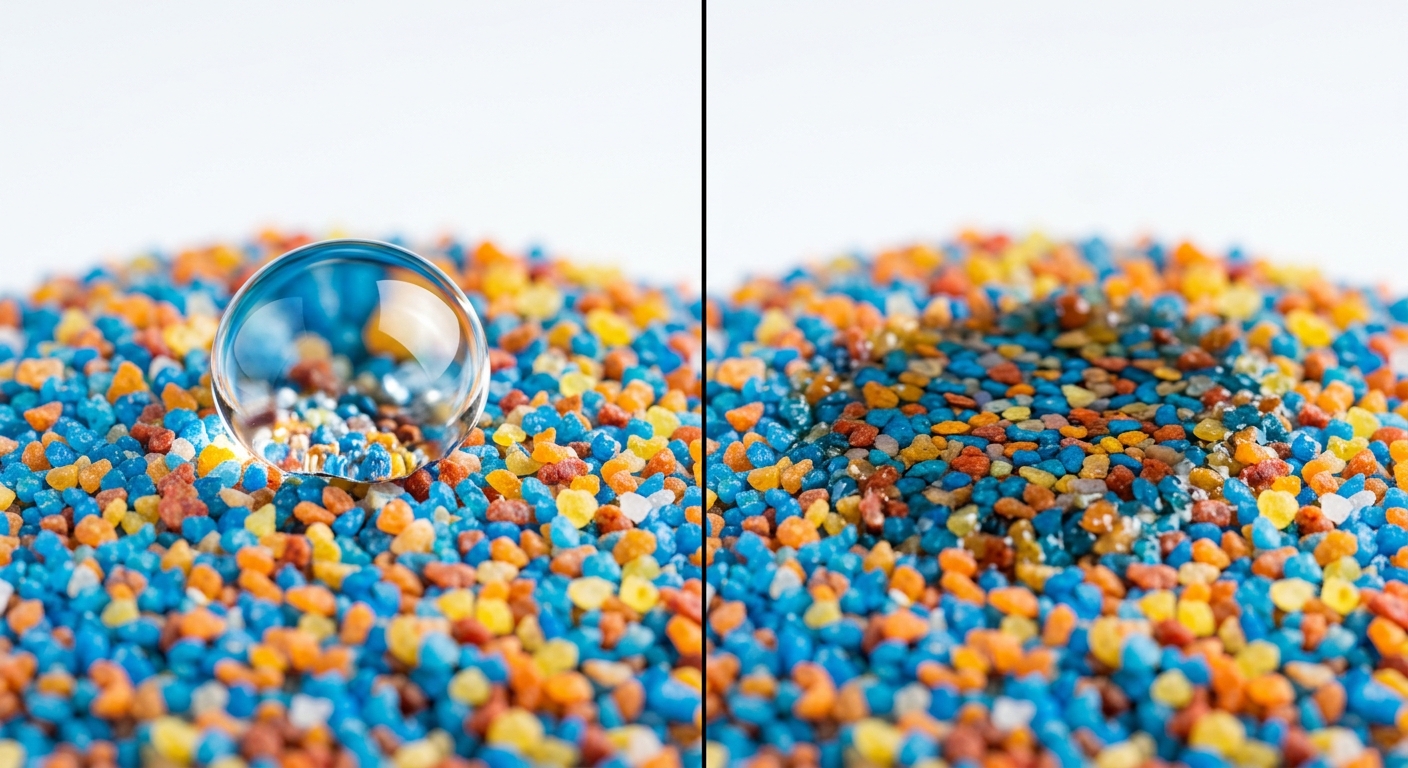
Water resistance and color stability come from the same physical property: surface tension control. A hydrophobic coating creates a continuous, non-porous film around each grain. That same film that repels water molecules also blocks pigment particles from escaping outward.
Porous, uncoated sand grains have microscopic gaps where pigment can settle loosely and later dislodge. A properly coated grain has almost no exposed porosity — the pigment has nowhere to migrate from.
This is also why coated sand doesn’t bleed color when it gets damp from humid hands or sweaty fingers during long play sessions. The coating isn’t just decorative; it’s functionally protective.
Real-World Test: What Happens During a Classroom Session
Picture a preschool sensory station where twenty children handle the same tray of colored moldable sand across a two-hour rotation. That’s hundreds of hand contacts, plus occasional sneezes, wiped noses, and the inevitable sand-to-sleeve transfer.
With bonded-pigment sand, teachers typically report minimal visible residue on hands or clothing after normal use — no rainbow-streaked palms, no tinted cuffs. With loosely dusted colored sand, the same session often leaves faint color smudges on light fabric within the first 20 minutes.
This distinction matters most for preschool sensory station setups, where uniforms, rugs, and shared furniture are constantly in contact with the material.

Manufacturer-Reported vs Independently Verified Claims
It’s worth being honest here: most “no color transfer” claims in the sensory sand industry are manufacturer-reported, based on internal handling tests rather than third-party lab verification. That doesn’t make them false — it just means buyers should know the difference.
A responsible manufacturer will describe their coating process, disclose the pigment type used (organic vs inorganic pigments behave differently under UV and moisture), and note any internal abrasion or rub testing performed. What they generally can’t claim — and shouldn’t — is that the sand is guaranteed stain-proof under every condition, including prolonged wet exposure or use on porous white fabric.
If you’re sourcing sand for a business, program, or classroom, ask directly what testing standard was applied. Rub tests, wet-transfer tests, and colorfastness assessments are all reasonable questions to raise.
Common Manufacturing Shortcuts That Cause Staining
Not all colored moldable sand is made the same way, and a few shortcuts explain most staining complaints.
- Skipping the pre-mix step: Pigment sprayed on after coating is applied, rather than blended into the coating liquid itself.
- Under-curing: Coating that hasn’t fully hardened leaves a tacky surface where pigment can still smear.
- Cheap pigment grades: Low-cost dye-based colorants are more prone to bleeding than pigment-grade colorants designed for polymer encapsulation.
- Uneven grain coverage: Inconsistent tumbling time means some grains get a thin, incomplete shell while others are properly sealed.
Any one of these shortcuts can produce sand that looks fine on day one but starts transferring color within a few play sessions.
How This Connects to Overall Material Quality
Color bonding isn’t an isolated feature — it’s a signal of overall manufacturing discipline. The same coating consistency that prevents color transfer is also what prevents sand from becoming sticky or crumbling apart during shaping. If a supplier cuts corners on pigment encapsulation, there’s a good chance they’re cutting corners on coating thickness elsewhere too.
This is why quality-focused buyers — toy brands, OT professionals, school procurement teams — often treat color stability as a quick, practical proxy for judging a batch’s overall coating quality, even before running any formal test.