

A calm-down corner works best when it gives a child something to do with their hands, not just a quiet place to sit — and moldable sand is one of the few materials that offers repetitive, low-stimulation tactile input without noise, mess, or complicated setup. Its weight, moldability, and consistent texture make it easier for a dysregulated nervous system to focus on one predictable sensation instead of a chaotic environment. This article breaks down how to actually build that corner, what role the sand plays physiologically and practically, and where the limits of this approach are.
Why Tactile Input Matters More Than Visual Calm
Most calm-down corners get designed around what they look like — soft lighting, pastel cushions, a tent. That’s a mistake if the goal is actual self-regulation. Visual calm is passive; it doesn’t give an overwhelmed child anything to do. Tactile input, on the other hand, is active and self-directed, which is exactly what a child in distress often needs.
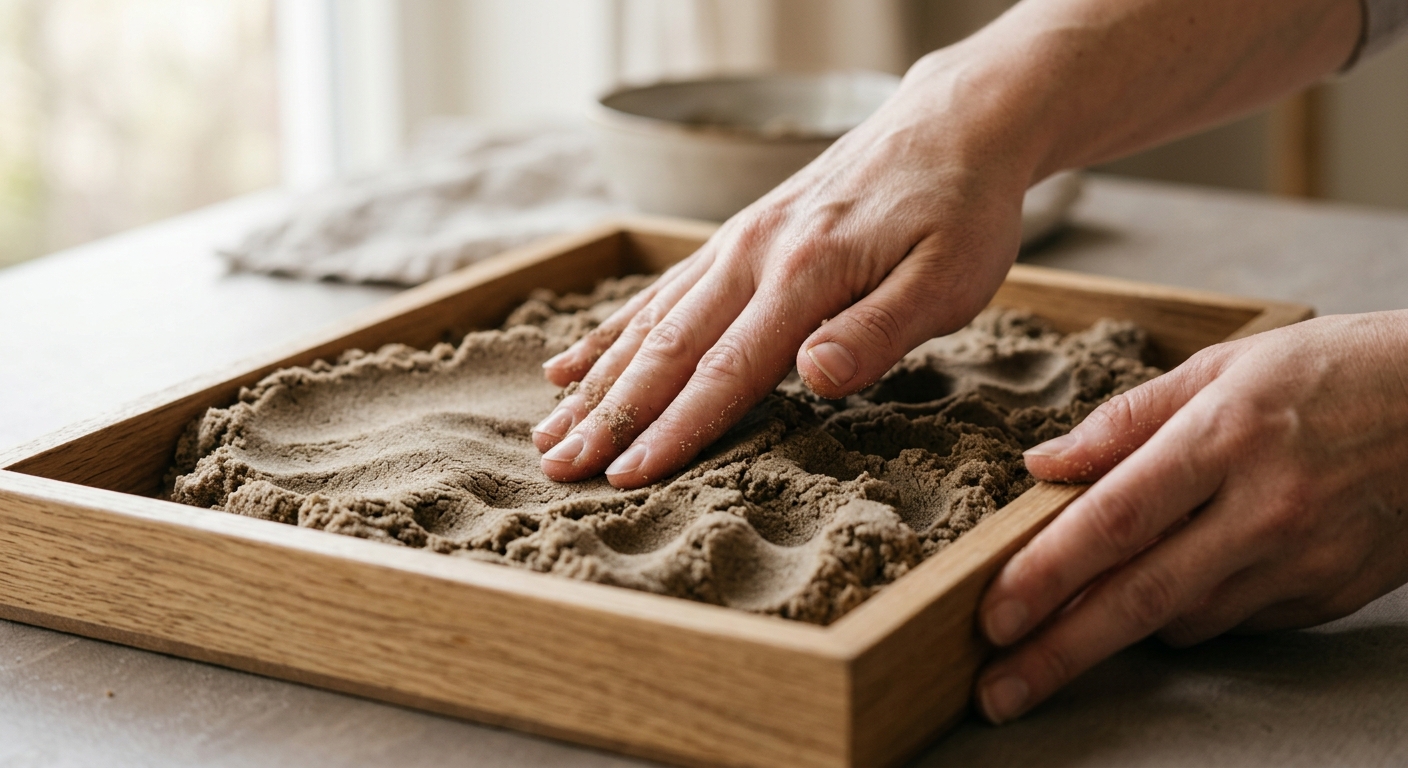
Moldable sand works because it responds predictably to pressure. Squeeze it, and it holds together instead of crumbling unpredictably like dry sand or shifting like water. That predictability matters — a nervous system already in overdrive doesn’t benefit from surprises, even pleasant ones. For background on why this material behaves so consistently, see the science behind magic sand and why it’s so mesmerizing.
Repetition Over Novelty
Novel toys compete for attention. A calming material should do the opposite — invite the same simple motion again and again: pressing, scooping, smoothing. That repetition is the mechanism, not the sand itself.
What the Research Actually Supports (and What It Doesn’t)
It’s worth being precise here: moldable sand is not a clinical intervention, and no manufacturer should claim it treats anxiety, autism, or ADHD. What’s manufacturer-reported and anecdotally observed by occupational therapists is that the deep-pressure, repetitive hand motions involved in molding sand can support self-regulation strategies already used in sensory integration practice. That’s different from a guaranteed therapeutic outcome.
Our earlier piece on how occupational therapists are using magic sand for autism and ADHD goes deeper into this distinction — it’s a useful read before assuming the material alone solves regulation challenges. Treat moldable sand as one tool among several, not a standalone fix.
Designing the Physical Space Around the Sand Tray
A calm-down corner lives or dies on its layout. Cramped, cluttered, or too visually busy, and the sand tray becomes just another stimulus to filter out. Here’s what tends to work in real classrooms and therapy rooms:
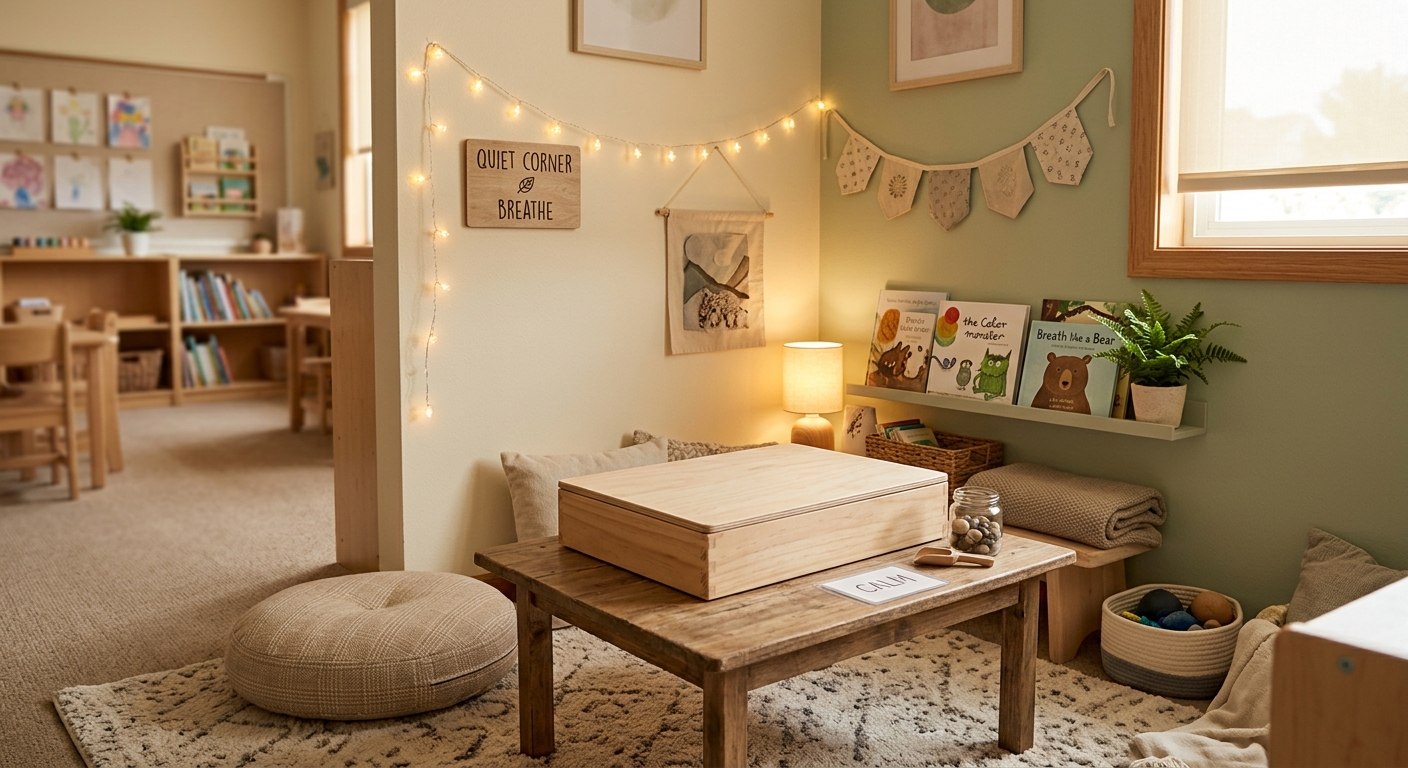
- Low, enclosed seating — a single chair or floor cushion facing a wall, not the room.
- One sand tray, one set of tools — too many molds and scoops turn calming play into decision fatigue.
- A lid or cover for the tray when not in use, to prevent dust settling and keep the corner visually tidy.
- Soft, non-reflective lighting — avoid anything flickering or overly bright.
For a broader layout framework that extends beyond calm-corner use into full classroom sensory stations, designing a sensory sand station for preschool classrooms covers space planning in more depth.
A Real Scenario: Rebuilding a Noisy Transition Corner
A preschool in a mixed-age classroom had a reading nook doubling as a ‘calm corner,’ but kids rarely used it during meltdowns — it was too open, too visible to peers. The teacher replaced one shelf with a low table holding a single tray of moldable sand and two basic tools: a flat spatula and a small cup.
Within two weeks, staff reported that children transitioning from high-energy outdoor play used the corner voluntarily, often for under five minutes, simply pressing shapes into the sand before rejoining group activities. No instructions were given beyond “you can use this if you need a minute.” The key change wasn’t the sand itself — it was removing decision-making and social visibility from the equation.
Choosing the Right Sand Texture for Regulation, Not Just Play
Not all moldable sand behaves the same, and texture matters more in a calm-down context than in open creative play. Sand that’s too crumbly breaks the predictability a dysregulated child needs; sand that’s too sticky creates a new frustration instead of relief.
Glass-bead-based formulations with hydrophobic surface treatment tend to hold shape longer and feel more consistent session to session. If you’re unfamiliar with why this composition behaves differently from ordinary play sand, glass beads vs silica sand explains the material distinction clearly. And if a batch starts clumping or losing its usual feel, troubleshoot it before it becomes a source of frustration in a sensitive setting — see my sand got sticky — 7 fixes that actually work.

Hygiene and Shared-Use Considerations
A calm-down corner often sees repeat use by multiple children across a school day, which raises a hygiene question most sensory corners ignore. Dust accumulation, cross-contact between hands, and shared tools all affect both play quality and basic cleanliness.
Practical steps that actually get followed in busy classrooms:
- Keep tray volume small — easier to inspect and refresh than a deep bin.
- Wipe tools between uses rather than between days.
- Store covered, away from direct sunlight, to reduce drying and texture drift.
For the underlying issue of dust and debris buildup over repeated use, sensory sand and contamination is directly relevant here — it’s written for exactly this kind of shared-use scenario.
Age and Developmental Fit — Don’t Assume One Size Fits All
A calm-down corner designed for a kindergarten classroom won’t automatically translate to a middle-school counseling office, and vice versa. Younger children often benefit from molds and simple shape-making; older students or adults in sensory-support settings may prefer open-ended pressing and smoothing without props, since tools can feel infantilizing.
There’s also a safety dimension — younger children mouth objects more frequently, which affects what’s appropriate to leave unsupervised in a corner meant for independent, low-supervision use. How to choose the right kinetic sand for your child’s age and sensory needs walks through these age-specific considerations in more detail.
Common Mistakes That Undermine the Calm-Down Corner
Even well-intentioned setups fail for predictable reasons:
- Too many sensory options at once — sand, fidgets, music, and lighting controls in the same small space create a new source of overstimulation.
- Treating it as a reward, not a tool — if access to the corner is conditional on behavior, children stop viewing it as a regulation resource and start viewing it as a privilege to lose.
- Ignoring upkeep — sand that’s gone dry, crumbly, or dusty stops being calming and starts being annoying. Check why does sand dry out for prevention basics.
- No clear re-entry plan — a calm-down space without a simple way to rejoin the group afterward can inadvertently become an avoidance strategy rather than a regulation one.