
Contamination — not age or overuse — is usually why sensory sand starts looking dull, feeling gritty, or refusing to hold shape. Dust settles into open trays, crumbs and craft debris get worked in during group play, and mixing sand between bins introduces foreign particles that disrupt the coating on individual grains. The good news: most contamination is preventable with a few habits, not expensive equipment.
Why Contamination Matters More Than People Think
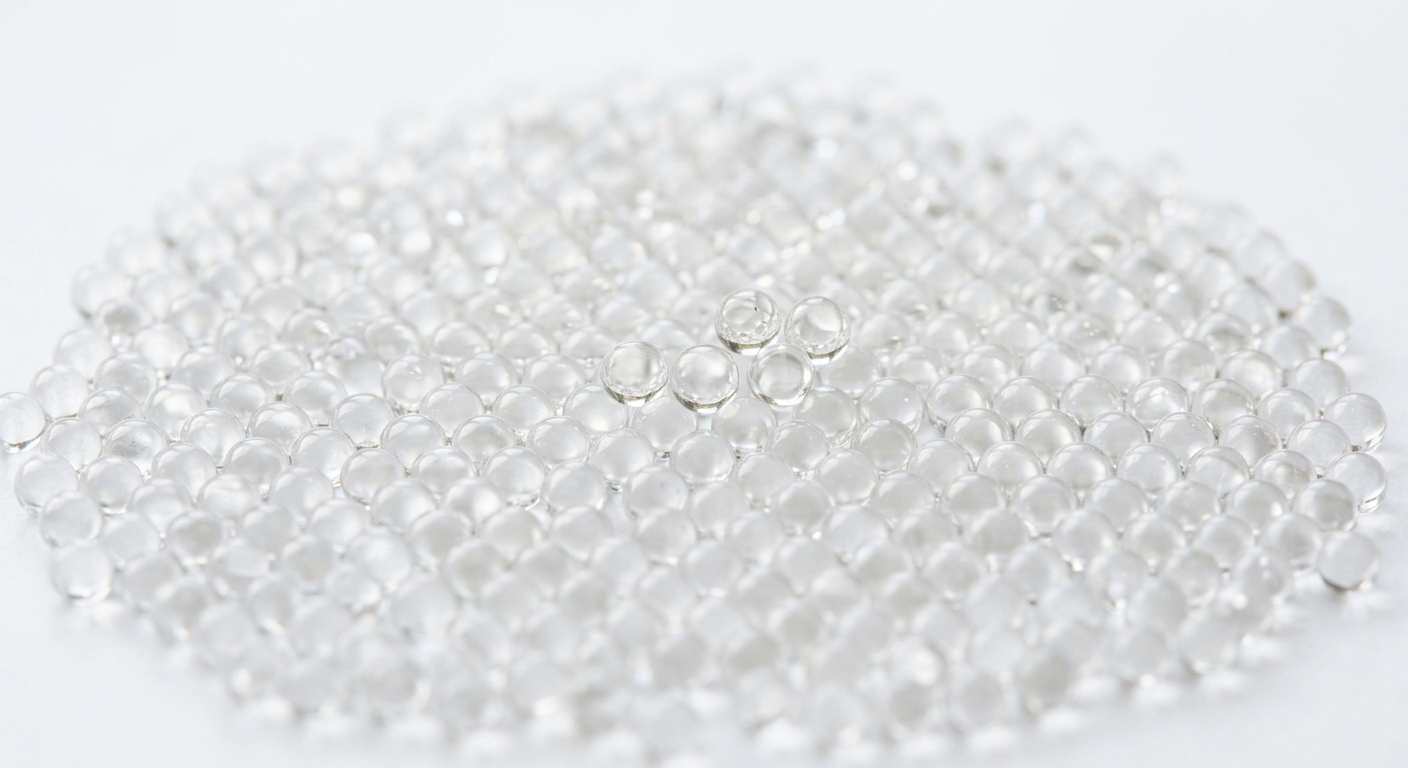
Here’s the thing most people miss: moldable sand isn’t just sand plus color. It’s a coated material — often glass-bead based — where a hydrophobic surface treatment controls how grains bond and flow. Introduce dust, lint, food oils, or other particles into that system, and you’re not just adding dirt. You’re interfering with the physical mechanism that makes the sand moldable in the first place.
A tray that’s been sitting open in a busy classroom for a semester isn’t the same material it was on day one, even if nobody spilled anything dramatic. Fine airborne particulate accumulates slowly, and it’s often invisible until the sand starts behaving differently — crumbling instead of holding, or feeling rough instead of silky.
The Three Main Contamination Pathways
1. Airborne dust and environmental debris
Open bins near windows, HVAC vents, or high-traffic hallways collect dust faster than anyone notices. Over weeks, this settles into the sand and changes its surface feel — it starts to feel powdery rather than smooth.
2. Cross-use between children or activities
Hands that touched glue, playdough, or a snack before reaching into the sand bin transfer oils, sugars, and fine residue. This is one of the most common causes of unexplained stickiness, which we cover in depth in My Sand Got Sticky — 7 Fixes That Actually Work.
3. Material mixing between bins or colors
Scooping from one color bin into another with the same tool — without cleaning it — introduces foreign grains that disrupt the color and bonding behavior of both batches.
How Contamination Shows Up in Play Quality
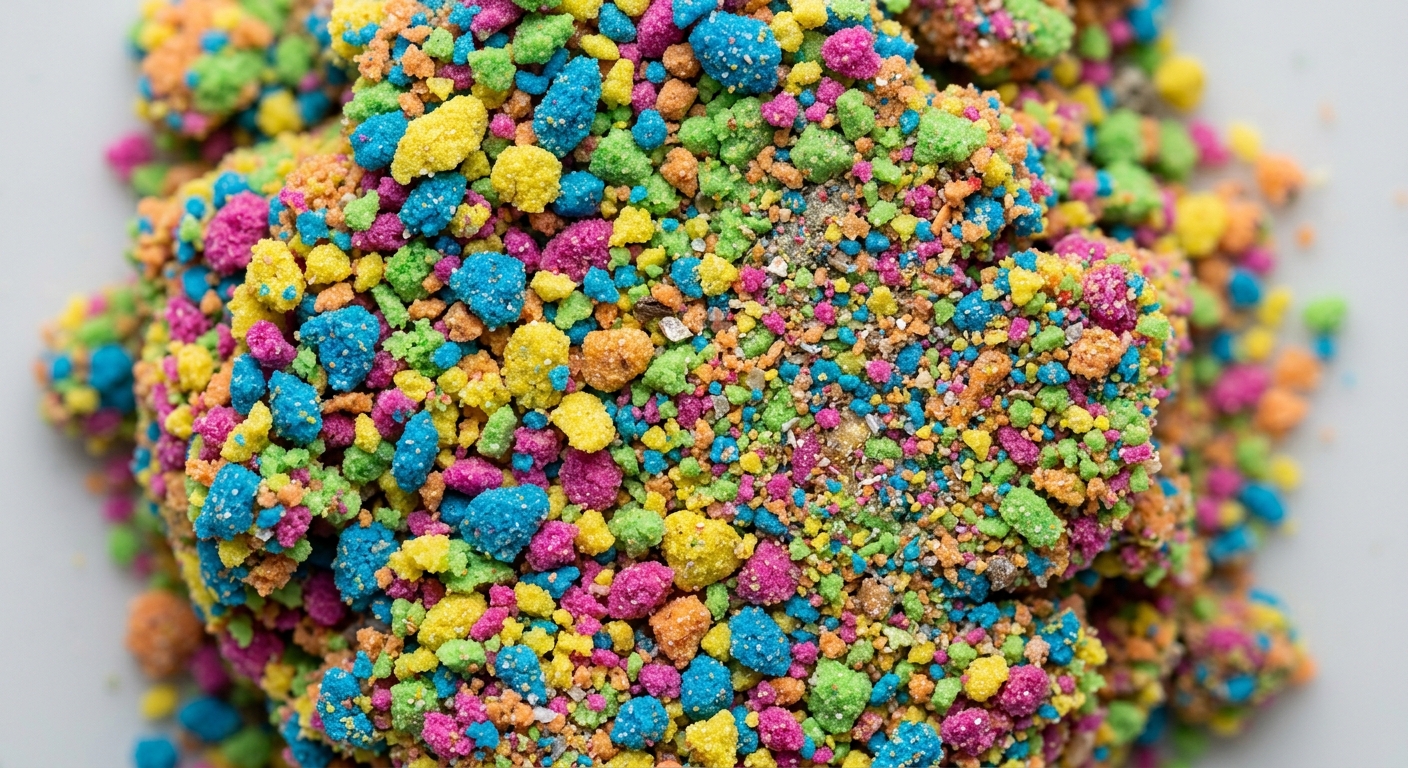
You’ll notice it before you can explain it. Sand that used to pack into a mold cleanly now falls apart at the edges. Color that was once vivid looks slightly muddy. There’s a faint grit when you rub it between your fingers instead of a smooth glide.
These aren’t random quality drops — they’re direct signs of surface interference. Dust and debris physically sit between grains, breaking the cohesion that lets the sand cling to itself. If you’ve already ruled out drying out as the cause (see Why Does Sand Dry Out?), contamination is usually the next suspect, closely related to the mechanics explained in Why Does Magic Sand Crumble Instead of Holding Its Shape?.
Real-World Example: A Preschool’s Shared Sand Table Problem
Consider a preschool running a single sensory sand table shared across three age groups throughout the day. By week three, teachers noticed the sand felt gritty and colors looked washed out, even though nobody had spilled water on it. The cause turned out to be simple: crumbs from snack time carried over on hands, plus dust from an open storage bin near the classroom door.
The fix wasn’t a new batch of sand — it was a routine. The school introduced a quick hand-wipe station next to the table and started covering the bin with a lid between sessions. Within two weeks, the texture recovered almost fully. This kind of setup is exactly what we walk through in Designing a Sensory Sand Station for Preschool Classrooms.

Cross-Contamination Between Colors: A Special Case
Mixing colors intentionally, as an art activity, is fine — that’s a controlled, chosen process. The problem is accidental mixing: a stray scoop of red sand ending up in the blue bin because a tool wasn’t wiped between uses.
Once grains from two batches combine, you can’t fully separate them again. The result is a slightly muddier tone and, depending on the pigment bonding method, potentially uneven texture. If your workflow involves intentional blending, it’s worth reading The Ultimate Guide to Kinetic Sand Mixing Colors to understand how to do it without long-term contamination of your stock bins.
Practical Contamination Prevention Routine
None of this requires elaborate cleaning protocols. A short, consistent routine does most of the work:
- Cover trays between uses — even a simple lid or cloth cuts airborne dust accumulation significantly.
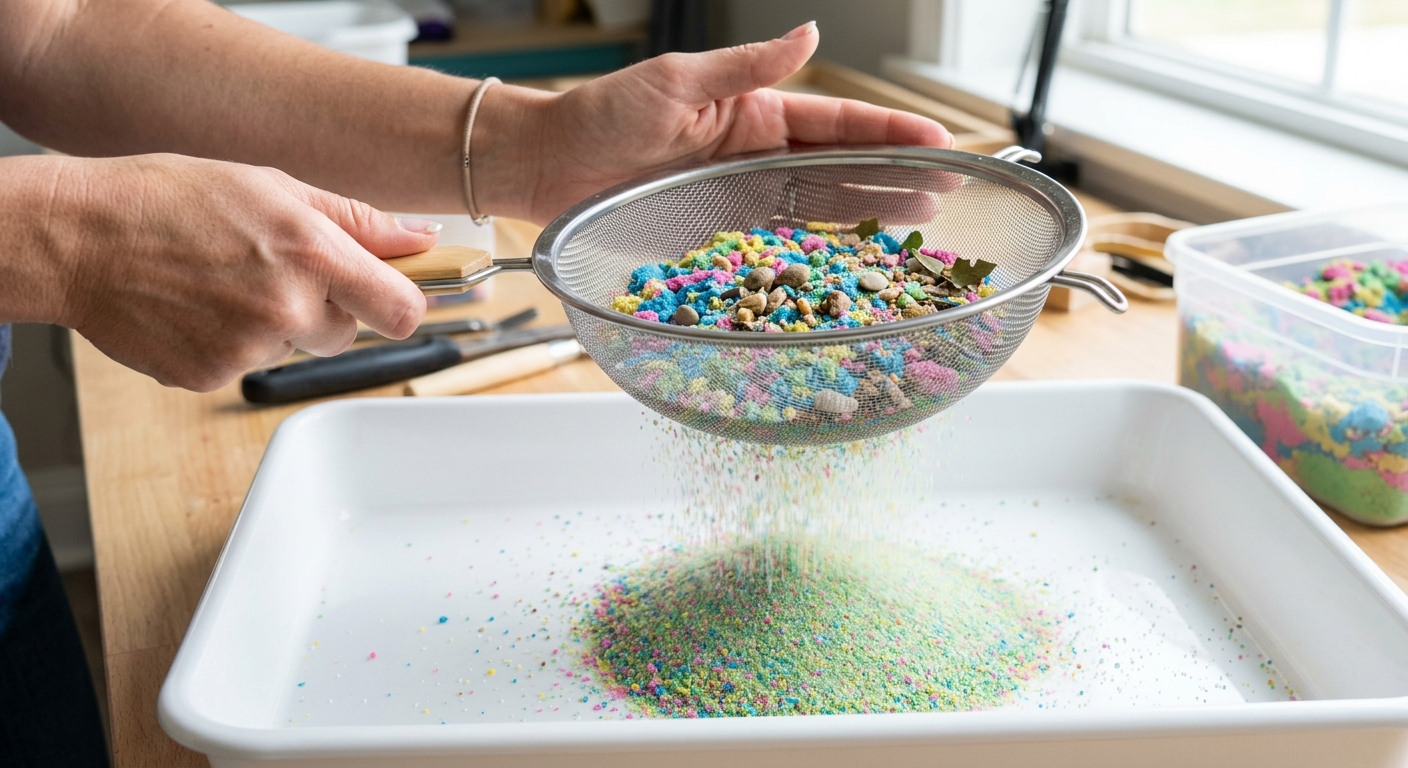
- Sieve monthly — a fine mesh sieve removes larger debris (lint, crumbs, small toy fragments) without damaging the sand.
- Dedicate one scoop per color or bin — this single habit prevents most accidental color mixing.
- No food near the sand station — a boring rule, but an effective one.
- Store sand in sealed containers when not in active use — reduces both dust exposure and moisture-related issues.
When Contamination Isn’t Fixable — And What to Do Instead
Sometimes the damage is beyond a quick clean. If sand has absorbed liquid contaminants (juice, glue, paint), sieving and airing won’t restore it — the surface coating itself may be compromised at a chemical level, not just physically dirty.
In classroom or business settings, it’s more practical to retire heavily contaminated batches rather than chase a full recovery. Rotating in smaller, dedicated batches for different activities — one for free play, one for craft projects — reduces the risk of any single batch becoming a catch-all for every kind of debris. This kind of segmentation is a common practice among sensory sand users running high-traffic stations.
How This Connects to Quality Control at the Source
Contamination isn’t only a user-side issue — it starts with how consistently a batch was manufactured and packaged before it ever reached a classroom. Uniform bead sizing and consistent hydrophobic surface treatment mean the sand is more resistant to minor debris intrusion. Understanding what’s actually inside your play sand — as explained in Glass Beads vs Silica Sand — helps explain why some batches tolerate light contamination better than others.