

The right kinetic sand depends on three things: your child’s age, their sensory preferences, and how they like to play. Toddlers need softer, less-dense sand in small quantities with chunky tools; school-age kids benefit from firmer, more sculptable sand in larger volumes; and sensory-sensitive children usually do best with a single-color, ultra-consistent texture that won’t overwhelm them. Get those three variables right and the sand becomes a genuinely useful toy instead of something that ends up forgotten in a drawer after a week.
Start With Age — It Changes Everything
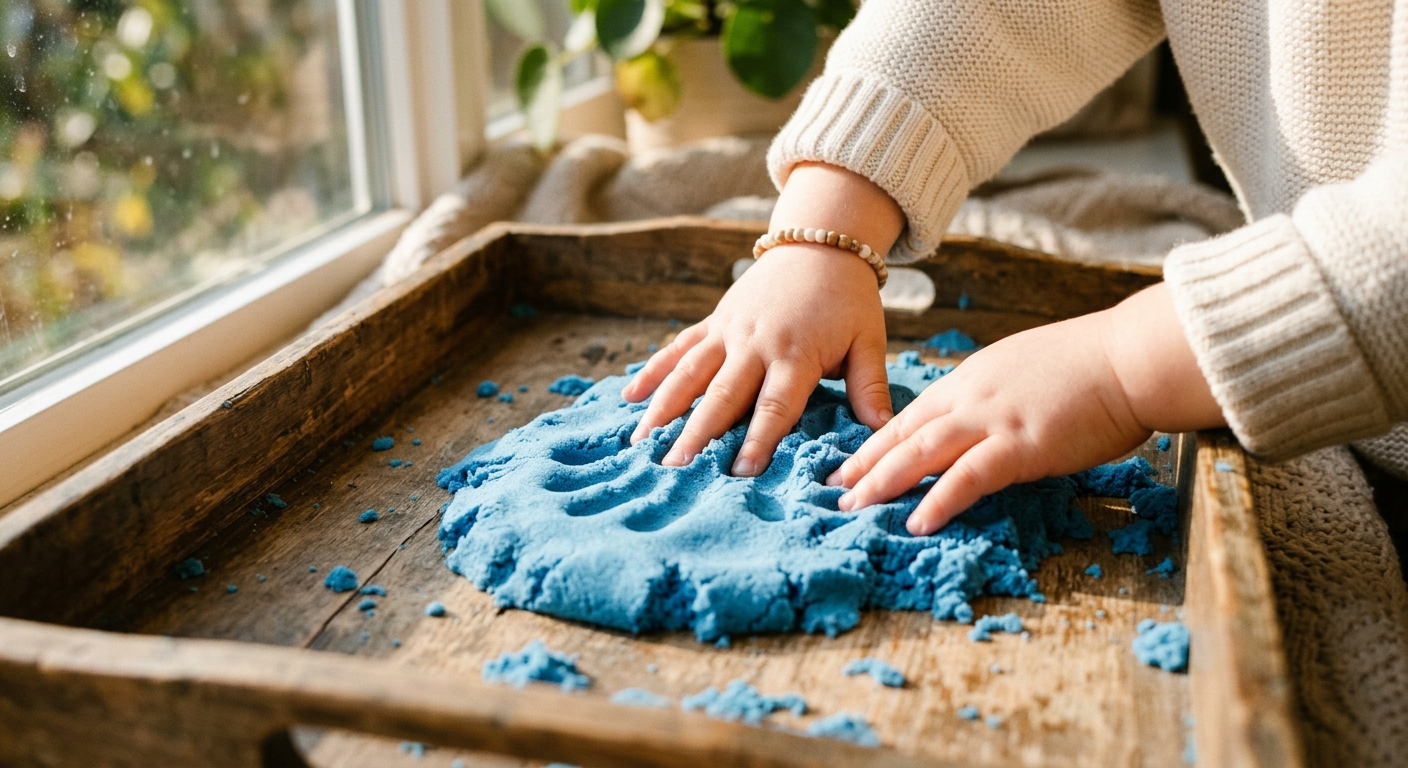
Age isn’t just about safety warnings on the box. It determines grip strength, attention span, and the kind of play a child actually enjoys. A two-year-old wants to squish and poke. A nine-year-old wants to build a castle with turrets.
For children under three, look for softer, fluffier kinetic sand — the kind that falls apart easily when squeezed. Dense sand frustrates small hands because they can’t break it apart. Buy in small quantities (1–2 lbs is plenty) and stick to one or two colors.
From ages four to six, kids gain the fine motor control to shape and mold. This is when firmer, more cohesive sand shines. They’ll start asking for cutters, rollers, and simple molds. Five pounds is a sweet spot — enough to build something substantial without overwhelming a play tray.
School-age children (7+) want detail. They sculpt, layer colors, and build scenes. They need dense, highly sculptable sand and proper tools. This is also the age where more creative play ideas keep engagement alive long-term.
Understand the Texture Spectrum
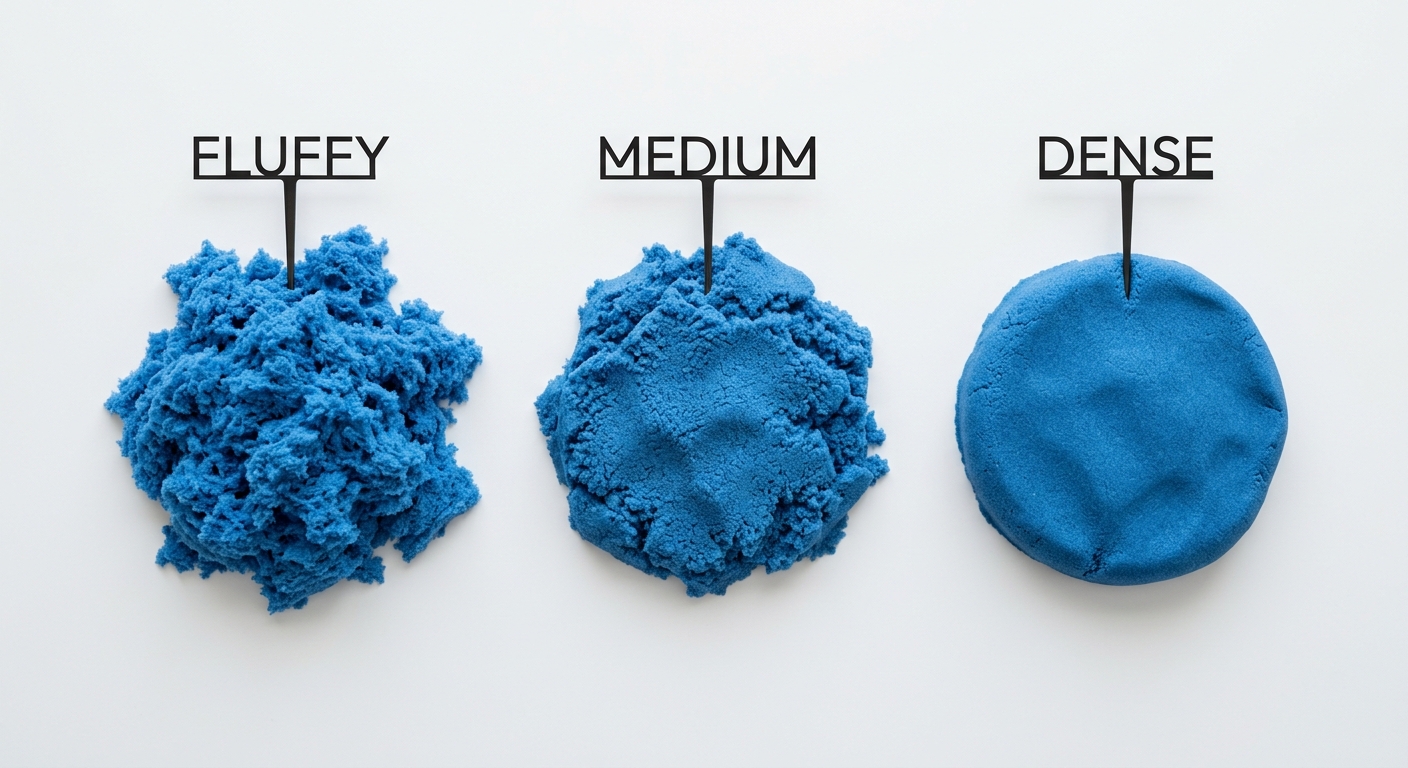
Kinetic sand isn’t one material — it’s a family of textures that vary in grain size, moisture-mimicking polymer ratio, and density. Understanding this spectrum helps you skip trial-and-error.
Soft and fluffy
Low density, crumbly, flows between fingers. Great for toddlers and sensory seekers who love the feeling of pouring and sifting. Less ideal for sculpting.
Medium (classic)
The standard kinetic sand most people picture. Holds shape when pressed but breaks apart cleanly. Works for the widest age range.
Dense and sculptable
Heavier, more polymer-bonded, holds fine detail like footprints or tool marks. Older kids and adults love it. Too firm for small hands.
If you’re not sure, start in the middle. The science behind kinetic sand explains why that 2% polymer coating makes such a dramatic difference in how each variant behaves.
Match Sand to Sensory Profile, Not Just Age
Two five-year-olds can have opposite sensory needs. One seeks stimulation — loud colors, strong textures, big mess. The other avoids it — a single grain in the wrong place ruins the experience. Buying the same product for both is a mistake.
Sensory seekers
These kids crave input. They dump sand between containers, bury their hands deep, smash and rebuild. Give them volume (5+ lbs), varied textures, and bold colors. They’ll engage longer when there’s more to feel.
Sensory avoiders
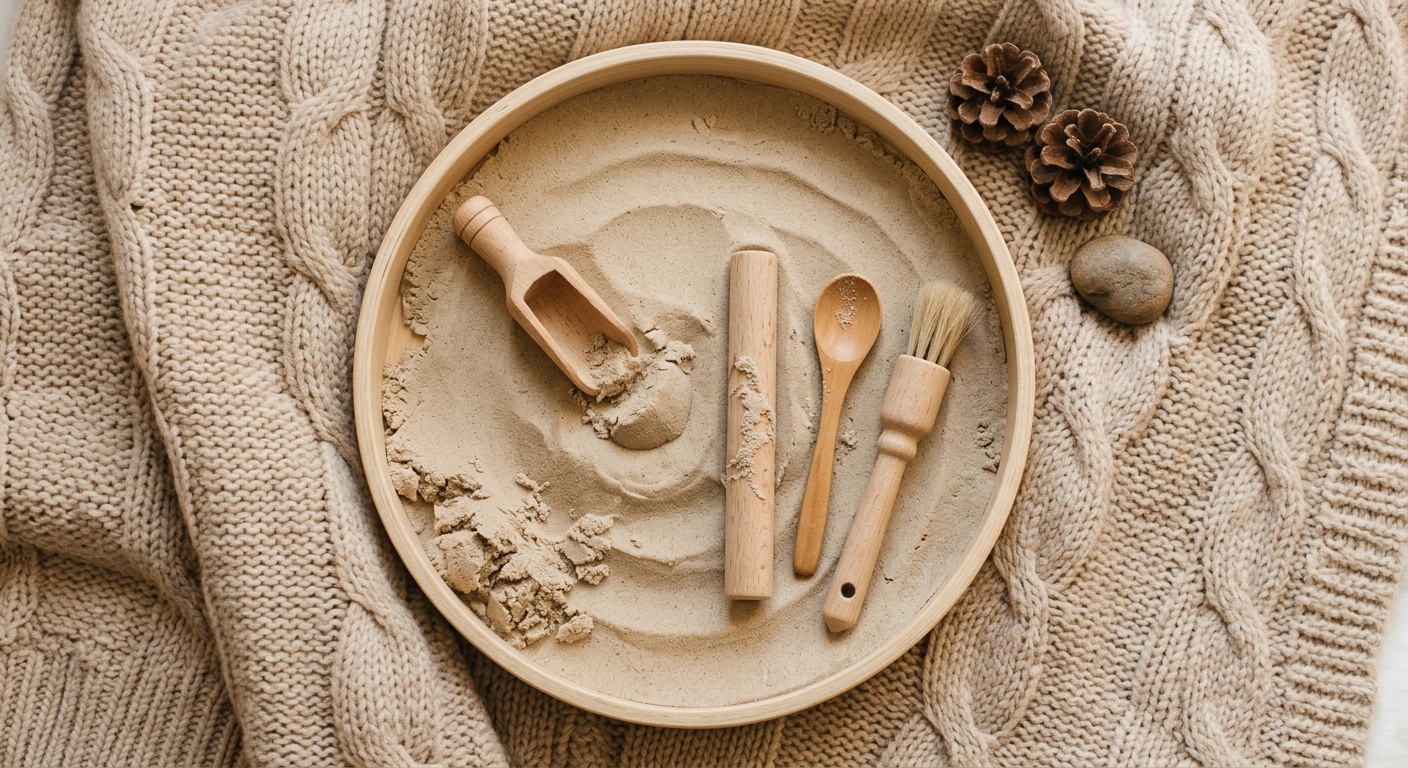
These kids flinch at stickiness or grittiness. Start with a single neutral color in a smaller quantity. Use a contained tray with sides. Let them touch it with a tool first before their hands — many warm up within a few sessions.
Kids with autism or SPD
Consistency matters more than variety. Stick with one texture, one color, and predictable tools. Our guide on sensory play for autism with kinetic sand walks through calming activities that work reliably across visits. For example, a speech therapist we work with uses 3 lbs of single-color soft sand in a shallow tray as a transition activity between sessions — it calms kids who arrive dysregulated within about five minutes.
Quantity: How Much Sand Does Your Child Actually Need?
Parents consistently underestimate this. A 1-lb package looks generous in the box and disappointing in a tray. Here’s a practical rule: you want enough sand to fill a tray 1–2 inches deep across the play area your child will use.
- Travel or lap tray (10×10 in): 1–2 lbs
- Standard sensory bin (16×12 in): 3–5 lbs
- Large play table or shared bin: 7–10 lbs
- Classroom or therapy setting: 10+ lbs
If you’re outfitting a preschool or running therapy groups, buying kinetic sand in bulk works out dramatically cheaper per pound and ensures color consistency across batches — which matters more than you’d think when a child notices that “the blue is different today.”
Color Choices That Support — Not Sabotage — Play
Color seems like a fun, harmless choice. It isn’t always. For younger kids, one or two colors beats a rainbow pack every time. Why? Because mixed colors turn muddy-brown within the first play session, and the disappointment is real.
If you want multiple colors, buy them separately and store them separately. A clear plastic container for each color with a labeled lid keeps the palette intact for months.
For sensory-sensitive kids, neutral tones (natural beige, soft white, pale blue) are easier on the nervous system than neon. For creative school-age kids, bolder colors invite storytelling — red “lava,” green “swamp,” black “outer space.”
One teacher we supply uses three colors — beige, blue, and green — to build entire biome dioramas with her second graders. She rotates which color is “featured” weekly so the novelty stays fresh without needing to buy new product.
Safety and Ingredients — What to Check Before Buying
Safety isn’t just a toddler issue. Allergies, skin sensitivities, and ingredient transparency matter for every age. Before buying, check three things: non-toxic certification, allergen disclosure (some sands use wheat-based binders), and whether the product is truly silicone-coated quartz sand rather than a generic “moldable sand” knockoff.
Our breakdown of what’s actually in magic sand and kinetic sand covers the chemistry in plain language. The short version: real kinetic sand is 98% fine quartz sand and 2% food-safe polydimethylsiloxane (PDMS). It’s non-toxic, but it’s not edible — so under-threes still need supervision.
For eco-conscious families, greener sand options use more sustainable sourcing without compromising the texture.
Tools and Accessories That Actually Match Skill Level
The wrong tools kill engagement faster than bad sand. A three-year-old with a detailed castle mold will get frustrated in two minutes because their sand compression isn’t consistent enough to release a clean shape.
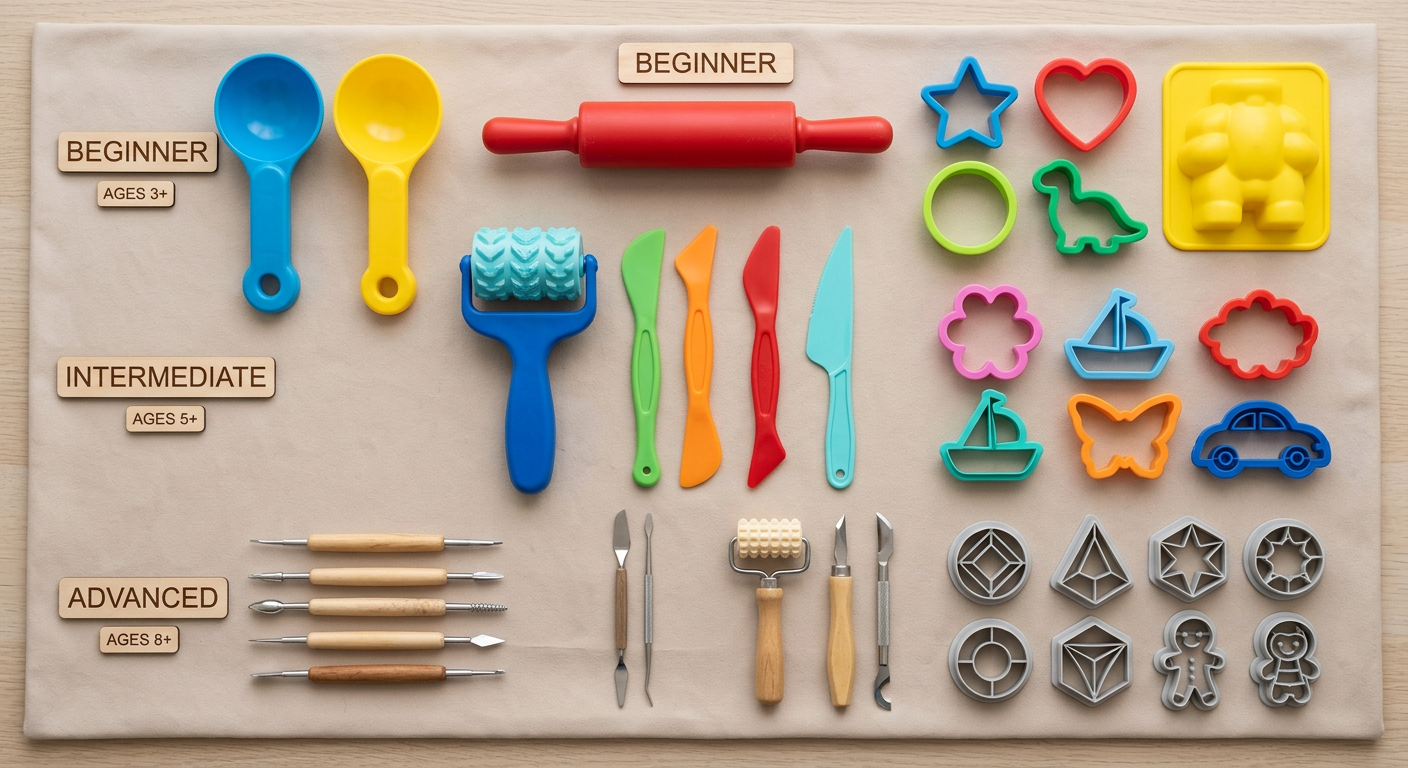
Ages 2–3
Big chunky scoops, silicone muffin cups, wide cookie cutters (animal shapes). Forget anything with fine detail.
Ages 4–6
Basic geometric molds, plastic knives for “cutting cake,” small rolling pins, simple letter stamps for early literacy play.
Ages 7+
Sculpting tools, texture rollers, layered molds, even small toy figures to build scenes around. This is the age where kinetic sand stops being a toy and becomes a medium.
If you need fresh ideas across age groups, our 30 creative kinetic sand activities post organizes play by skill level.
Storage and Longevity — Buy Once, Play for Years
Here’s something most buying guides skip: how you store kinetic sand determines whether it lasts six months or six years. Properly stored, the same 5-lb container will outlive most other toys in the house.
Store it in an airtight container at room temperature, away from direct sunlight and dust. The enemy isn’t moisture (kinetic sand doesn’t dry out in the traditional sense) — it’s foreign particles, fabric fibers, and crumbs that permanently change the texture.
If your sand does lose its bounce, don’t throw it out. Our step-by-step guide on reviving kinetic sand restores most batches in minutes.
Putting It All Together: A Quick Buying Framework
If you only remember one thing: buy for the child you have, not the aspirational child on the packaging.
- Identify age bracket — toddler, preschool, or school-age.
- Assess sensory profile — seeker, avoider, or neutral.
- Choose texture — soft, medium, or dense to match both.
- Right-size quantity — match to tray size, not marketing claims.
- Select colors intentionally — fewer is usually better.
- Match tools to motor skills — not age on the box.
Do this once and you’ll skip the cycle of buying small tubs that disappoint. If you’re outfitting a classroom, therapy practice, or retail shelf, the math on bulk gets even more favorable — reach out through our contact page or browse our bulk options to match volume and color to your specific use case. We’d rather help you pick the right product the first time than sell you three wrong ones.